The batch at a glance
Cold-process soap formula
- Yield
- About 8–10 bars, depending on mold and cut size
- Total oils
- 500 g
- Superfat
- 5%
- Cure
- 4–6 weeks
- Fragrance
- Unscented
| Ingredient | Amount | Oil share |
|---|---|---|
| Olive oil | 225 g | 45% |
| Palm oil (regular palm) | 150 g | 30% |
| Coconut oil (76°) | 100 g | 20% |
| Castor oil | 25 g | 5% |
| Sodium hydroxide (NaOH)Calculated at 5% superfat; assumes 100% NaOH purity. | 69.52 g | — |
| Distilled waterSoapSpice’s disclosed cold-process baseline for this formula. | 160.63 g | — |
| Red cosmetic micaUse a colorant rated for cold-process soap; disperse in 5 g of the measured olive oil. | At the supplier’s rate | — |
| FragranceThis recipe is an unscented fresh base. | 0 g | — |
- Reserve 5 g of the measured 225 g olive oil to disperse the red mica. Do not add it as extra oil.
- Divide the batter approximately 60% ivory and 40% red. Make five roughly equal layers in this order: ivory, red, ivory, red, ivory.
- The lye amount assumes 100% NaOH purity. Recalculate if you change the oil blend, weights, superfat, or liquid setting.
- The water amount is SoapSpice’s disclosed cold-process starting baseline, not an optimum inferred for every formula or process.
The listed 500 g oil blend was checked against the SoapSpice calculator at 5% superfat: 69.52 g NaOH and 160.63 g distilled water. The NaOH amount assumes 100% purity. Confirm supplier SAP values, oil types, NaOH purity, and measurements before making.
Recalculate this batch in SoapSpice01 /
Five clean layers, one simple design
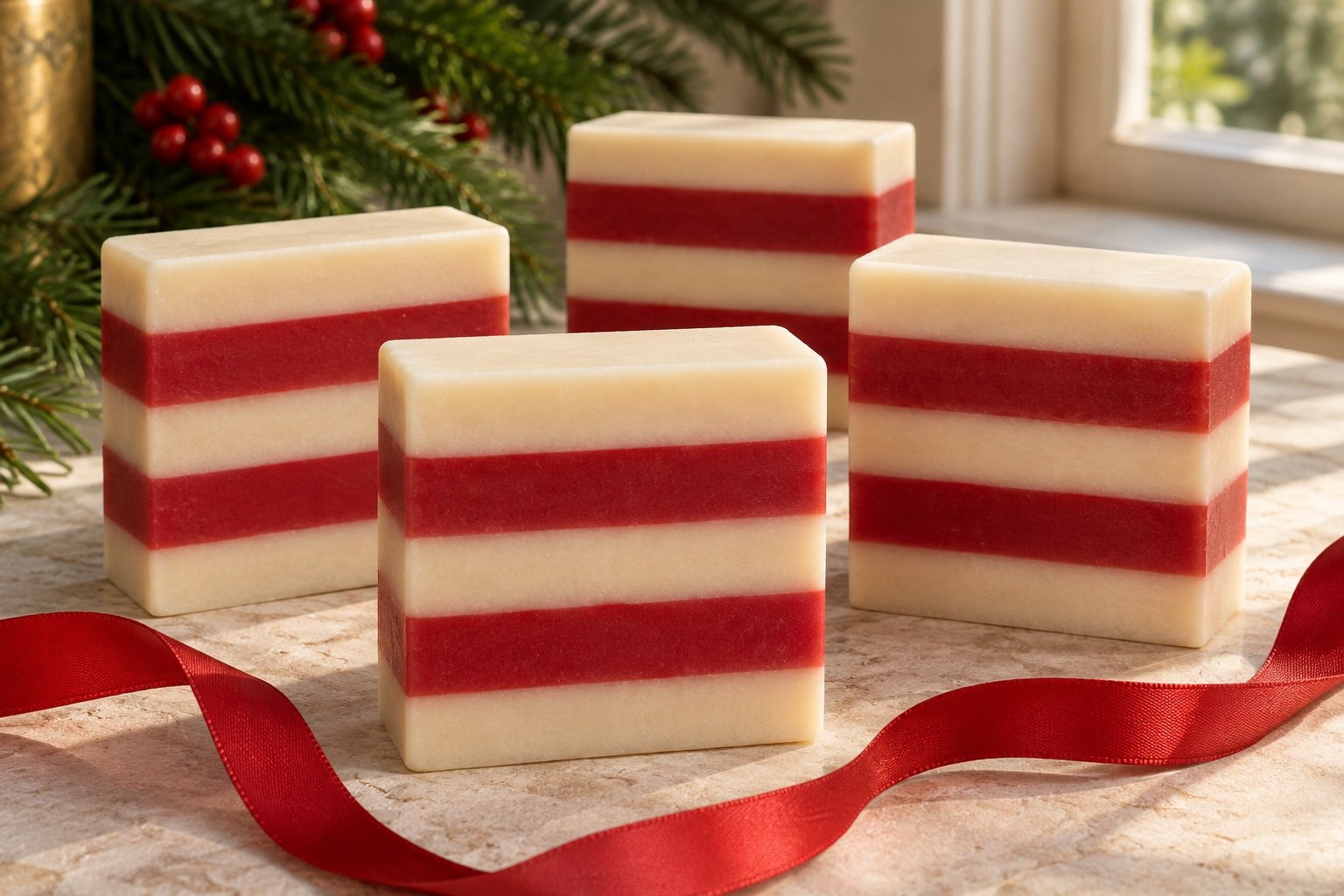
This candy-cane-inspired loaf uses three ivory bands separated by two red bands. Rather than making a complicated swirl, the design depends on a stable emulsion, medium batter consistency, gentle pouring, and completing all five layers in one session.
The holiday name describes the look only. The fresh soap base is unscented; it contains no peppermint or other fragrance.
- 500 g of base oils with a 5% superfat
- About 60% ivory batter and 40% red batter
- Five roughly equal layers: ivory, red, ivory, red, ivory
- Allow about 60–90 minutes to make, 24–48 hours or longer before cutting, and 4–6 weeks to cure
02 /
Formula and calculator check
For this exact oil blend, SoapSpice calculates 69.52 g sodium hydroxide (NaOH) at 5% superfat and 160.63 g distilled water. The NaOH amount assumes 100% purity. Confirm your oil types, supplier SAP information, NaOH purity, and weights before making.
In the cold-process calculator, choose grams, enter the four oils and weights below, set superfat to 5%, select distilled water, and leave fragrance at zero. Validate the formula again if you change any ingredient or setting.
| Ingredient or setting | Amount |
|---|---|
| Olive oil | 225 g (45%) |
| Regular palm oil | 150 g (30%) |
| Coconut oil (76°) | 100 g (20%) |
| Castor oil | 25 g (5%) |
| Total oils | 500 g |
| Superfat | 5% |
| Sodium hydroxide (NaOH) | 69.52 g |
| Distilled water | 160.63 g |
| Red cosmetic mica | Supplier rate; disperse in 5 g of measured olive oil |
| Fragrance | 0 g — unscented |
- Use regular palm oil, not palm kernel oil, and coconut oil listed as 76°.
- Melt and mix palm oil thoroughly before weighing so the portion is representative.
- The red mica is a design addition, not a base oil; keep it out of the lye calculation.
03 /
Equipment and NaOH safety
Set out a reliable gram scale, thermometer, immersion blender, silicone spatulas, stainless-steel pot, lye-rated heat-resistant polypropylene pitcher, batter cups, and a silicone loaf mold that holds at least 800 g of batter. Five small cups can make it easier to weigh the layers.
Wear splash goggles, chemical-resistant gloves, and long sleeves. Work with ventilation, keep children and pets away, and use dedicated soapmaking equipment. Avoid aluminum and fragile glass for raw soap or the lye setup.
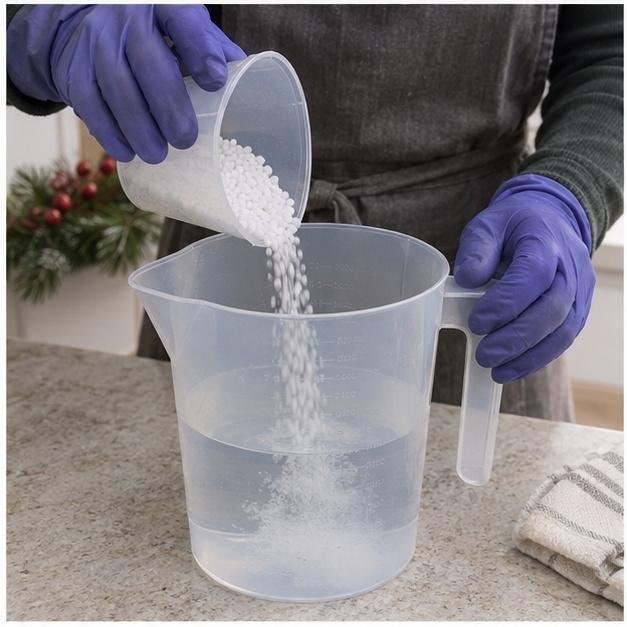
Read the NaOH supplier’s safety sheet first. Slowly add sodium hydroxide to measured distilled water while stirring—never pour water onto dry NaOH. Avoid breathing the hot vapor and leave the solution to cool securely. For exposure, rinse with running water and follow the supplier’s emergency guidance.
04 /
Make the candy-cane layers step by step
Keep your protective gear on while handling NaOH and raw soap batter. Work through the steps in order and have the mold and layer cups ready before you begin pouring.
- 01
Weigh and organize. Check each oil against the formula and mark five layer cups ivory, red, ivory, red, ivory. Reserve 5 g from the measured 225 g olive oil for the mica. Weigh by mass rather than using measuring cups.
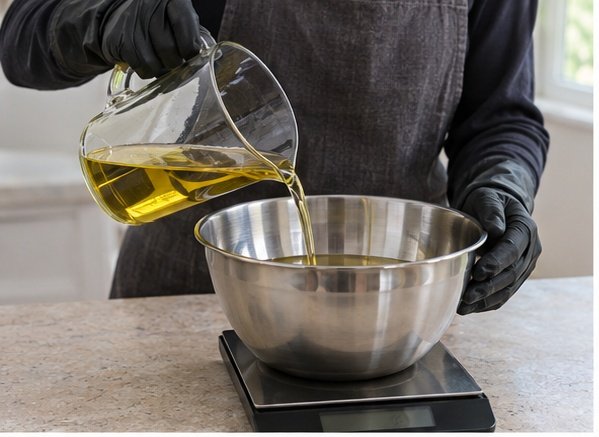
Illustration: weigh the oils and organize the layer sequence before mixing. - 02
Prepare the lye solution. Weigh 160.63 g distilled water and 69.52 g NaOH separately. Slowly sprinkle the NaOH into the water while stirring—never the reverse. Keep your face away from the rising vapor and let the hot solution cool in a secure, ventilated place.
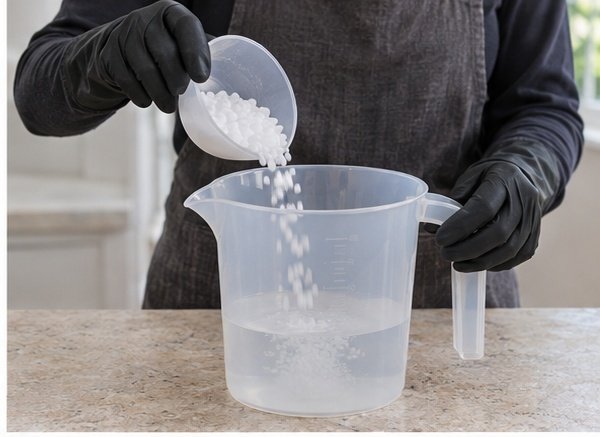
Illustration: add the measured NaOH to water, then leave the solution to cool safely. - 03
Melt and combine the oils. Thoroughly mix the palm oil before weighing its 150 g portion. Melt the coconut oil and combine it with the palm, olive, and castor oils, keeping the reserved 5 g olive oil aside. Aim for fully liquid oils and a lye solution around 38–43°C (100–110°F). Slowly pour the lye solution into the oils, then use brief submerged blender pulses alternating with hand stirring until evenly emulsified.
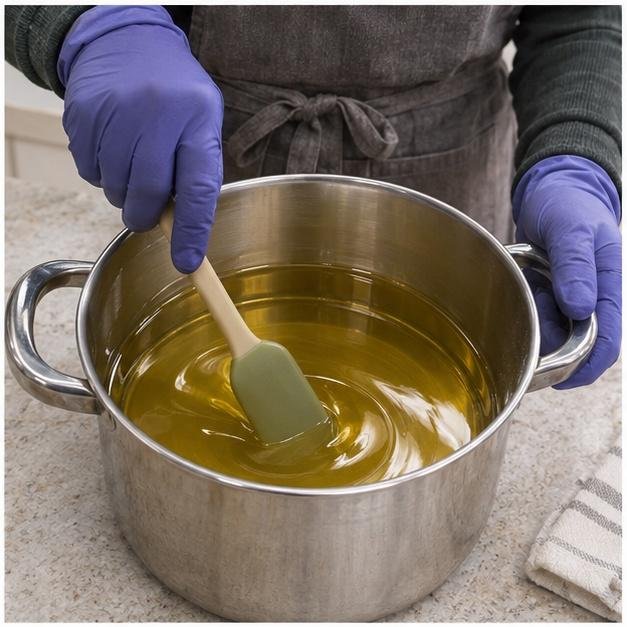
Illustration: melt and thoroughly combine the measured oils. - 04
Split and color. Disperse the red mica in the reserved 5 g olive oil, then stir it into about 40% of the batter. Leave about 60% naturally ivory. Aim for a medium trace: the batter should flow slowly and briefly hold a trail. Keep both portions at similar thickness.
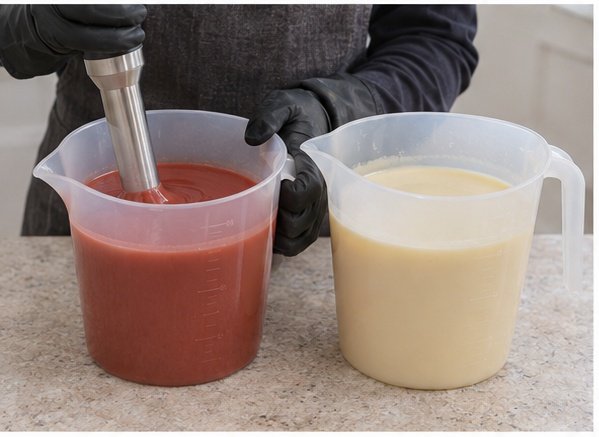
Illustration: color about 40% of the batter red and leave the remaining 60% ivory. - 05
Lay the ivory foundation. Spoon one third of the ivory portion into the mold—about 20% of the total batch. Gently spread it into the corners and level it without scraping the bottom. The surface should hold when the next layer is placed.
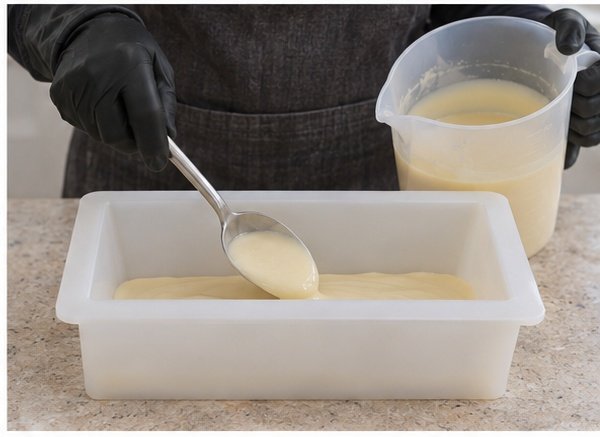
Illustration: add the first ivory layer gently and level it in the mold. - 06
Alternate the red and ivory layers. Pour half the red portion over the back of a spatula held just above the first layer, then level gently. Add half the remaining ivory, the remaining red, and finally the remaining ivory. Complete the sequence in one session before a dry skin forms; if the batter thickens, spoon it in gently instead of pouring.
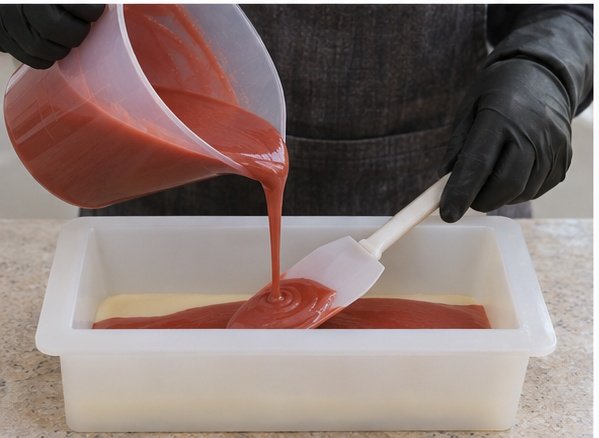
Illustration: pour gently over a spatula to keep the red and ivory bands distinct. - 07
Set, unmold, slice, and cure. Leave the mold securely at room temperature and protected from dust. Check firmness after 24–48 hours or later; wait if the loaf is sticky or dents easily. Wearing gloves, unmold when it holds its shape and cut crosswise into bars about 2.5 cm (1 inch) thick, keeping fingers clear of the blade.
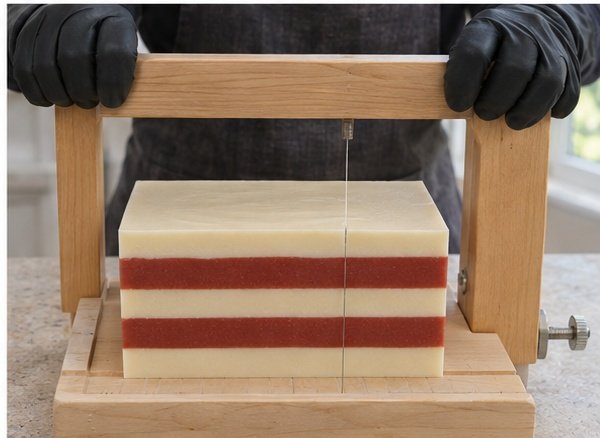
Illustration: cut the loaf only when it is firm enough to hold its shape.
05 /
Cure, troubleshoot, and plan gifts
Space the cut bars on a nonreactive rack in a dry, ventilated area for 4–6 weeks, turning periodically. Record the batch date, exact ingredients, and observations. Curing can improve firmness, but it cannot correct a lye-weighing error or separated batch. Wrap only dry, cured bars in breathable paper and include an accurate ingredient list.
Plan backward from the intended gift date and allow at least six weeks plus time to assess the bars. Cure time is a guideline, not a promise that a batch is ready on a specific date; do not rush the cure.
| What you notice | What to check next time |
|---|---|
| A layer sinks or breaks through | The batter may be too fluid or the pour too forceful. Use medium trace and spoon close to the surface. |
| Layers separate when cut | A long pause or dried interface can weaken the bond. Build all five layers in one session and avoid oil lines between them. |
| Red looks pink | Colorant and dose affect the shade. Use supplier-rated red mica within its stated usage rate and test the color on a small batch. |