The batch at a glance
Cold-process soap formula
- Yield
- About 8–10 bars, depending on mold and cut size
- Total oils
- 500 g fresh base oils
- Superfat
- 5%
- Cure
- 4–6 weeks for the new loaf
- Fragrance
- Unscented fresh base; check the known fragrance history of the cured chips
| Ingredient | Amount | Oil share |
|---|---|---|
| Olive oil | 225 g | 45% |
| Palm oil (regular palm) | 150 g | 30% |
| Coconut oil (76°) | 100 g | 20% |
| Castor oil | 25 g | 5% |
| Sodium hydroxide (NaOH)For the fresh base at 5% superfat; assumes 100% NaOH purity. | 69.52 g | — |
| Distilled waterCalculator estimate for the fresh base. | 160.63 g | — |
| Fragrance for fresh baseUnscented base. | 0 g | — |
| Fully cured red soap offcutsSeparate design addition; use clean, sound offcuts with known ingredients. | 25 g | — |
| Fully cured green soap offcutsSeparate design addition; do not calculate new lye for cured chips. | 25 g | — |
- The fresh base is 500 g oils + 69.52 g NaOH + 160.63 g water = 730.15 g before cure. The 50 g cured chips bring the planned loaf to about 780.15 g before cure.
- Choose a mold that holds at least 900 g. The cured chips are not raw oils and are not included in the SoapSpice lye calculation.
- Use only clean, unused, fully cured soap with known ingredients and fragrance history. Offcuts from this same base are preferred; reject moldy, rancid, weeping, lye-heavy, or otherwise questionable bars.
- Keep the original ingredient records for the chips so the finished gift can be labeled accurately.
The fresh 500 g oil base matches SoapSpice’s current calculator at 5% superfat. Its 69.52 g NaOH amount assumes 100% purity. Cured soap chips are a separate 50 g design addition: do not enter them as oils or calculate extra lye for them. Check the current calculator and supplier specifications before making.
Recalculate this batch in SoapSpice01 /
Turn sound soap offcuts into confetti
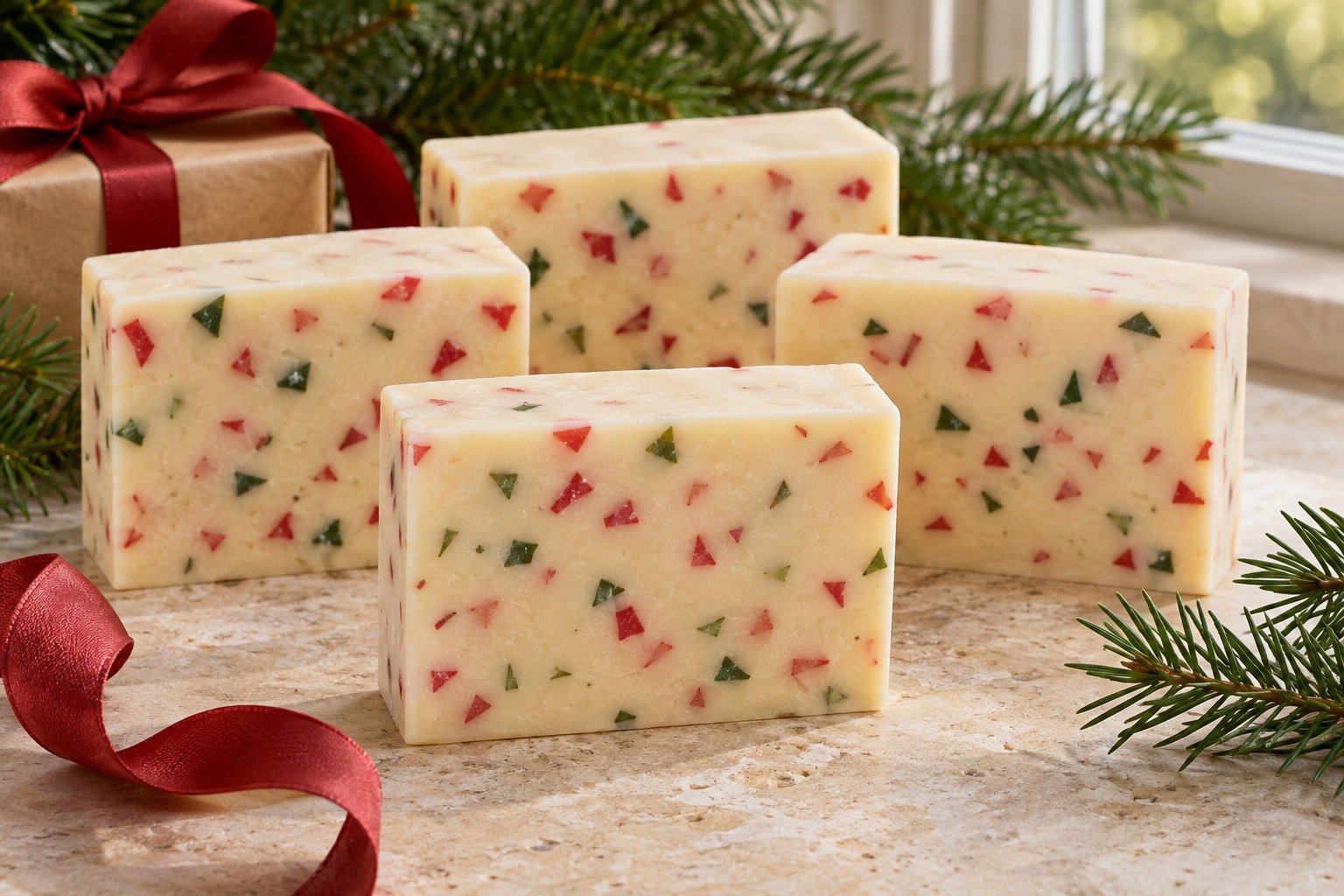
Small pieces of previously made soap create the color in this Christmas confetti design. Red and evergreen chips are folded into a new ivory cold-process base, so each slice shows a different scatter of color.
This recipe makes a fresh 500 g oil base and adds 50 g of fully cured soap offcuts. The cured pieces are a design additive—not raw oil. Do not enter them in the calculator, and do not calculate new NaOH for them.
- Fresh base: 500 g oils, 5% superfat, unscented
- Design addition: 25 g red and 25 g green fully cured soap chips
- Expected loaf weight before cure: about 780.15 g
- Use a mold with at least 900 g capacity
- Allow about 60–90 minutes to make, 24–48 hours or longer before cutting, and 4–6 weeks to cure the new loaf
02 /
Fresh base formula and calculator check
For the exact four-oil base below, SoapSpice currently calculates 69.52 g sodium hydroxide (NaOH) at 5% superfat and 160.63 g distilled water. This NaOH amount assumes 100% purity. Confirm your current calculator result, oil types, supplier SAP information, and lye purity before weighing.
The water is SoapSpice’s disclosed cold-process baseline. It applies to the fresh oils and alkali—not the cured soap pieces. Recalculate for oil substitutions, a different batch size, or a fragrance change; never guess at a new lye amount.
| Ingredient or setting | Amount |
|---|---|
| Olive oil | 225 g (45%) |
| Palm oil (regular palm) | 150 g (30%) |
| Coconut oil (76°) | 100 g (20%) |
| Castor oil | 25 g (5%) |
| Total fresh oils | 500 g |
| Superfat | 5% |
| Sodium hydroxide (NaOH) | 69.52 g |
| Distilled water | 160.63 g |
| Fresh-base fragrance | 0 g — unscented |
| Cured soap chips | 50 g total — separate design addition |
- Select grams, sodium hydroxide (NaOH), and distilled water in the cold-process calculator.
- Enter the four fresh oils and weights above, set superfat to 5%, keep fragrance unscented, and validate.
- Do not count the cured red and green soap chips as oils or add lye for them.
- The chips can contain fragrance from their original recipe. Use only bars with known ingredient records and include those details when labeling the new batch.
03 /
Choose safe cured soap pieces
Use 25 g red and 25 g green of clean, unused, sound cold-process soap that has completed its cure. Offcuts from the same base are preferred because different recipes can shrink or behave differently. The original ingredients and any fragrance must be known.
Reject rancid, moldy, weeping, lye-heavy, or otherwise questionable bars. Confetti is a decorative technique, not a way to make defective or unidentified soap safe. Cut the usable pieces into small, even chips about 3–5 mm across and leave out dusty crumbs and unusually large chunks.
04 /
Gather equipment and protect your workspace
Set out a reliable gram scale, thermometer, immersion blender, silicone spatulas, stainless-steel pot, lye-rated heat-resistant polypropylene pitcher, and batter cups. Prepare a stable cutting board and sharp knife for the cured offcuts, plus a loaf mold with at least 900 g capacity for this design.
Wear splash goggles, chemical-resistant gloves, and long sleeves. Work with ventilation, keep children and pets away, and avoid aluminum or fragile glass for raw soap or the lye setup.
05 /
Prepare the chips and make the fresh base
Prepare the offcuts first so they are ready to fold in when the base reaches a stable medium trace. Keep protective gear on during all work with NaOH and raw batter.
- 01
Chop the offcuts. On a stable cutting board, keep your fingers clear of the blade and cut known, cured red and green bars into even pieces about 3–5 mm across. Do not use moldy, rancid, weeping, lye-heavy, or unidentified soap.
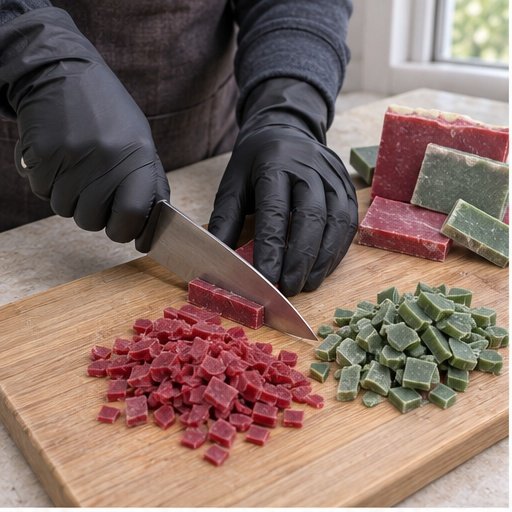
Illustration: cut only sound, known cured soap into small even chips. - 02
Weigh a modest chip load. Measure 25 g of red and 25 g of green chips. Keep them dry and at room temperature; leave out tiny dusty crumbs and unusually large chunks. Carry forward the original ingredient and fragrance records.
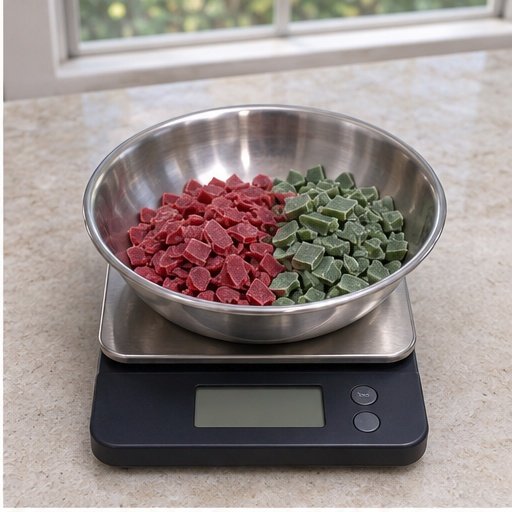
Illustration: weigh 25 g of each color for a total 50 g addition. - 03
Prepare the lye solution. Weigh 160.63 g distilled water and 69.52 g NaOH separately. Wearing goggles, gloves, and sleeves, slowly add the NaOH to the water while stirring—never water onto NaOH. Avoid the hot vapor, let the solution cool securely with ventilation, and follow the supplier safety sheet. For exposure, rinse with running water and follow the supplier’s emergency guidance; do not use vinegar.
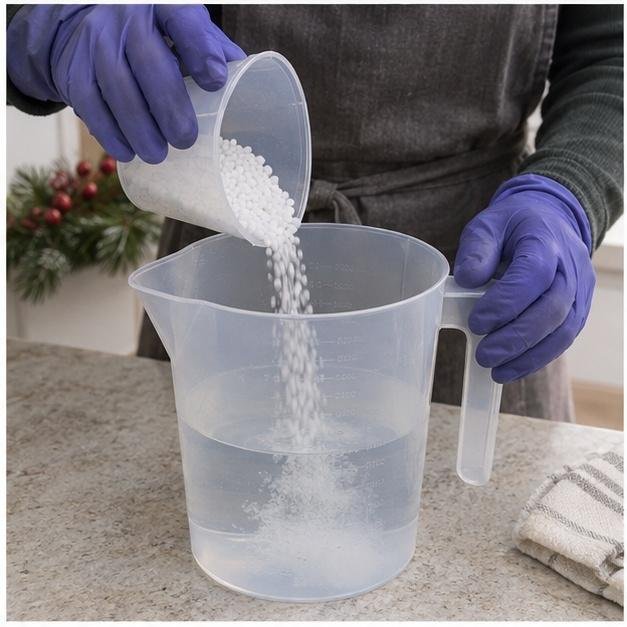
Illustration: add sodium hydroxide to water and leave the hot solution to cool safely. - 04
Melt and combine the oils. Thoroughly melt and mix the palm oil before weighing its 150 g portion. Melt the coconut oil, then combine the palm, coconut, olive, and castor oils. Aim for oils and lye solution around 38–43°C (100–110°F), with every hard fat fully liquid.
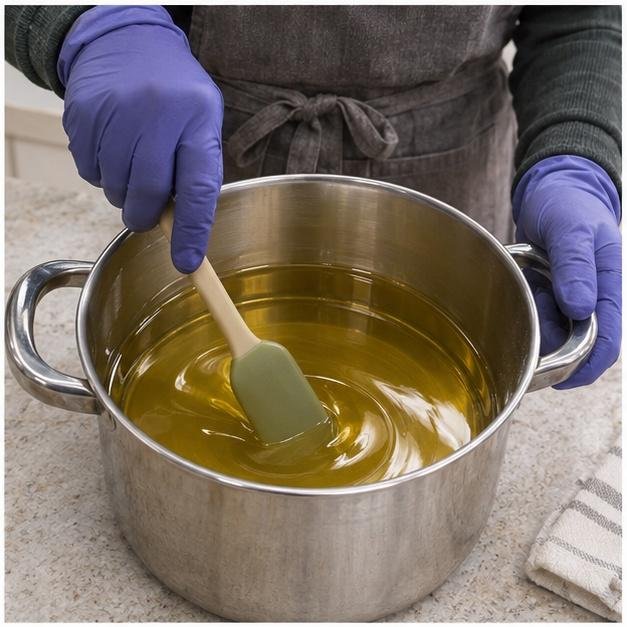
Illustration: melt and combine the fresh base oils before mixing. - 05
Make the fresh base. Slowly pour the cooled lye solution into the oils. Keep the immersion-blender head submerged and alternate brief pulses with hand stirring until the batter reaches stable emulsification and medium trace that can suspend small chips. A thick mass from cooled fats is not a reliable emulsion check.
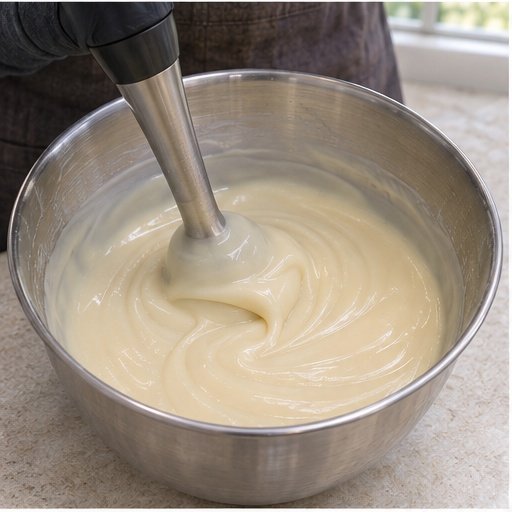
Illustration: blend the fresh base until evenly emulsified and able to suspend the chips.
06 /
Fold in the chips, fill, and cure
Once the base is at a stable medium trace, work gently so the chips stay intact and distribute through the loaf.
- 01
Fold the chips through by hand with a silicone spatula, scraping the bottom so the colors distribute evenly. Do not stick-blend after adding the chips; blending can chop them up and smear their colors.
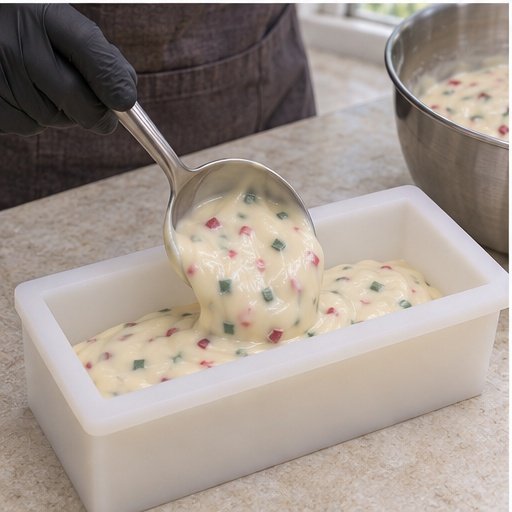
Illustration: fold in the measured chips by hand rather than stick-blending. - 02
Fill and settle the mold. Spoon the mixture into a mold holding at least 900 g, working into the corners. Smooth the top without pulling chips out. Tap gently on a protected counter to settle larger gaps, cover against dust, and leave the loaf securely at room temperature without forced heating.
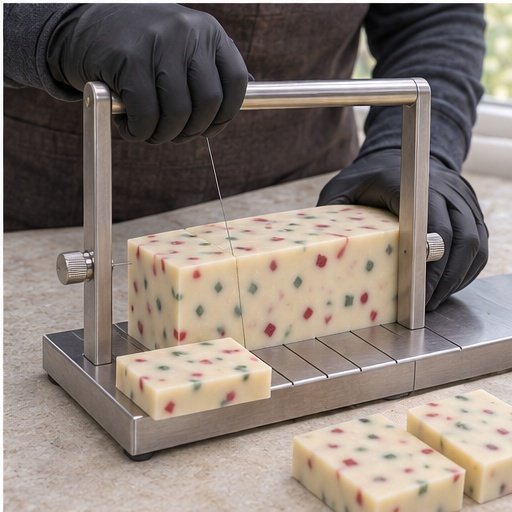
Illustration: spoon the confetti batter into the mold and work it into the corners. - 03
Check firmness after 24–48 hours and wait longer if the loaf dents or sticks. Unmold with gloves and cut crosswise on a stable surface. Although the chips were cured, the surrounding fresh soap is new: cure the whole batch for 4–6 weeks with airflow. Keep the original chip records linked to the new batch for accurate gift labeling.
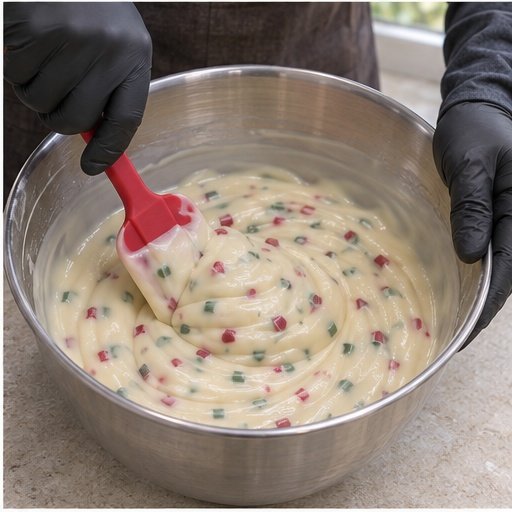
Illustration: cut once the loaf is firm, then cure the entire new batch.
07 /
Cure, troubleshoot, and plan gifting
Space the bars on a nonreactive rack in a dry, ventilated area for 4–6 weeks, turning them periodically. Record the new batch date and exact ingredients. Curing can improve firmness, but it cannot correct a lye-weighing error or a separated batch. Wrap only dry, cured bars in breathable paper and keep them dry between uses.
Allow at least six weeks before gifting, plus time for a small test batch. A batch made November 22 reaches four weeks on December 20 and six weeks on January 3; do not promise Christmas readiness from the calendar alone. If there is not enough cure time, choose an already-cured batch rather than rushing the new loaf.
| What you see | What to adjust |
|---|---|
| Chips settle at the bottom | The fresh batter may have been too fluid or the chips too large. Use smaller, even chips and a stable medium trace. |
| Gaps surround the chips | Pieces may be too large or the batter too thick. Use smaller chips and press batter gently around them while filling. |
| Only unknown scraps are available | Do not use them. Confetti is a design technique, not a way to make unidentified or defective soap safe. |