The batch at a glance
Cold-process soap formula
- Yield
- About 6–8 bars, depending on cut size
- Total oils
- 500 g
- Superfat
- 5%
- Cure
- 4–6 weeks
- Fragrance
- Unscented
| Ingredient | Amount | Oil share |
|---|---|---|
| Olive oil | 225 g | 45% |
| Palm oil (regular palm) | 150 g | 30% |
| Coconut oil (76°) | 100 g | 20% |
| Castor oil | 25 g | 5% |
| Sodium hydroxide (NaOH)Calculated at 5% superfat; assumes 100% NaOH purity. | 69.52 g | — |
| Distilled waterSoapSpice’s disclosed cold-process baseline for this formula. | 160.63 g | — |
| Cosmetic colloidal oatmealUse only if it falls within the supplier’s recommended soap-use range. | 2 g | — |
| Cosmetic brown micaChoose a colorant rated for cold-process soap; disperse in 5 g of the measured olive oil. | As directed by supplier | — |
- Reserve 15 g of the measured 225 g olive oil for the colloidal-oatmeal slurry and another 5 g for the mica. Do not add extra oil.
- “Gingerbread-inspired” describes the warm brown-and-cream design. This recipe is unscented and does not use ginger, cinnamon, or cookie pieces.
- The 2 g oatmeal addition and mica are design additives, not base oils; keep them out of the lye calculation.
The 500 g oil base matches the current SoapSpice calculator at 5% superfat: 69.52 g NaOH and 160.63 g distilled water, assuming 100% NaOH purity. Confirm supplier SAP values, oil types, NaOH purity, and measurements before making.
Recalculate this batch in SoapSpice01 /
Warm holiday colors without kitchen spices
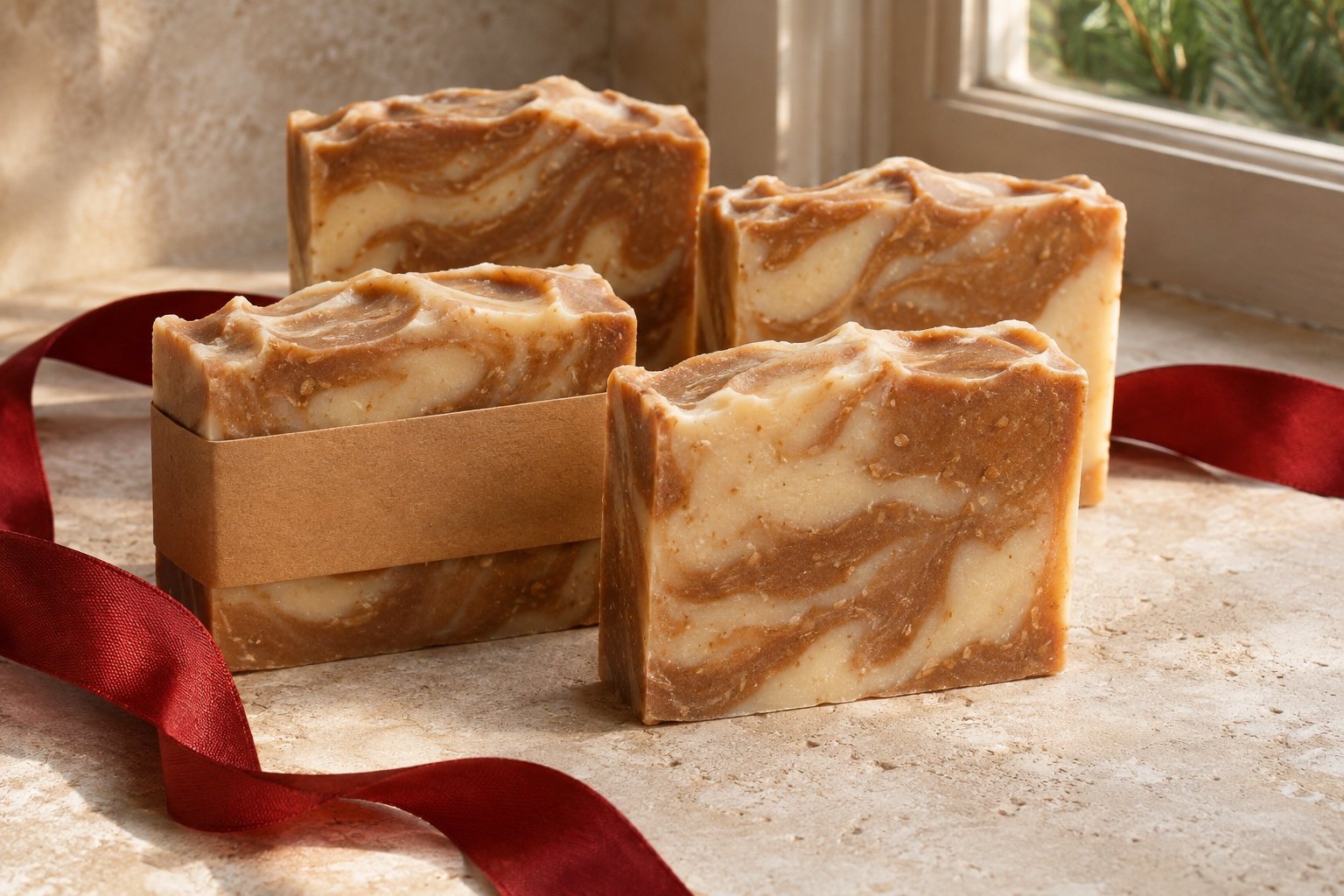
This cold-process recipe uses a familiar 500 g blend of olive, regular palm, coconut, and castor oils. Two grams of finely milled colloidal oatmeal are stirred into the emulsified batter, which is then divided into cream and brown portions for a relaxed spoon-plop pattern.
The gingerbread inspiration is visual only: the batch is unscented and contains no kitchen ginger, cinnamon, or cookie pieces. The cover is illustrative artwork, so real bars will vary in color and pattern.
- 500 g base oils at 5% superfat
- 2 g cosmetic colloidal oatmeal, subject to the supplier’s usage guidance
- Brown cosmetic mica dispersed in 5 g of the measured olive oil
- About 60–90 minutes to make, 24–48 hours or longer before cutting, and 4–6 weeks to cure
- Beginner-friendly design after practicing a plain batch and learning safe NaOH handling
02 /
Formula and calculator check
For the four listed oils, SoapSpice calculates 69.52 g sodium hydroxide (NaOH) at 5% superfat and 160.63 g distilled water. The NaOH amount assumes 100% purity. The water is the calculator’s disclosed cold-process baseline, not an ideal amount for every formula or process.
Before weighing, confirm that your palm oil is regular palm oil—not palm kernel oil—and that your coconut oil is 76°. Check supplier SAP information and the NaOH label, then validate the exact oil weights in the calculator. Recalculate if you change an oil, its weight, superfat, or liquid setting.
- Enter olive oil 225 g, regular palm oil 150 g, 76° coconut oil 100 g, and castor oil 25 g.
- Set superfat to 5%, select distilled water, and keep fragrance at zero for an unscented batch.
- Do not enter colloidal oatmeal or mica as oils, and do not include the reserved 20 g olive oil a second time.
03 /
Prepare equipment and handle NaOH carefully
Set out a reliable gram scale, thermometer, immersion blender, silicone spatulas, stainless-steel pot, lye-rated heat-resistant polypropylene pitcher, batter cups, and a silicone loaf mold with at least 800 g capacity. Wear splash goggles, chemical-resistant gloves, and long sleeves. Work with ventilation and keep children and pets away.
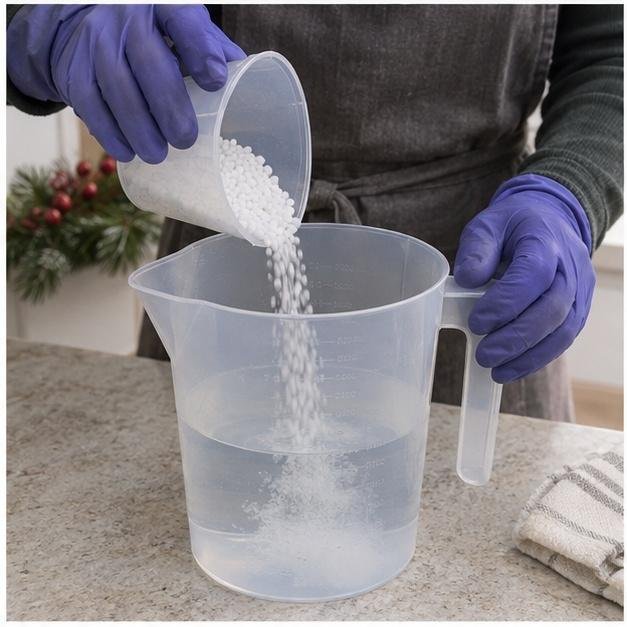
Use dedicated soapmaking equipment. Keep aluminum and fragile glass away from raw soap and the lye solution. Follow the NaOH supplier’s safety instructions; slowly add NaOH to measured distilled water while stirring—never pour water onto dry NaOH. Avoid the rising vapor and leave the hot solution to cool in a secure, ventilated place.
04 /
Make the oatmeal soap, step by step
Measure and set out each ingredient before you begin. Keep protective gear on while handling NaOH and raw batter. The colored pattern is designed to stay broad and rustic rather than form a fine swirl.
- 01
Prepare the additives. Weigh 2 g cosmetic colloidal oatmeal and mix it with 15 g olive oil reserved from the measured 225 g until smooth. Separately disperse the brown mica in another 5 g of that same measured olive oil. Keep both cups labeled and ready; the total reserved oil is 20 g, not extra oil.
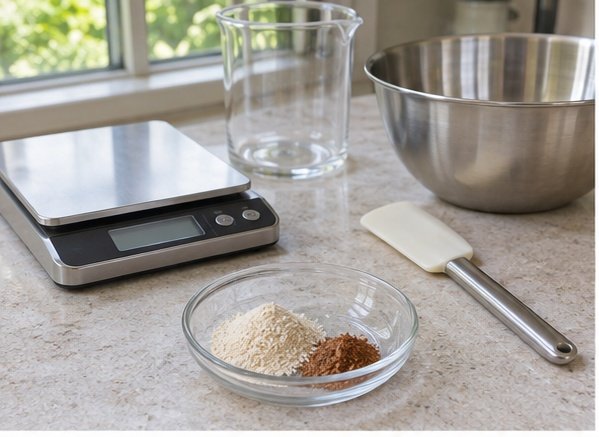
Illustration: weigh the powders and reserve measured olive oil for each dispersion. - 02
Prepare the lye solution. Weigh 160.63 g distilled water and 69.52 g NaOH separately. Wearing splash goggles, gloves, and sleeves, slowly add the NaOH to the water while stirring. Never pour water onto NaOH. Keep your face back, avoid the vapor, and let the solution cool securely with ventilation.
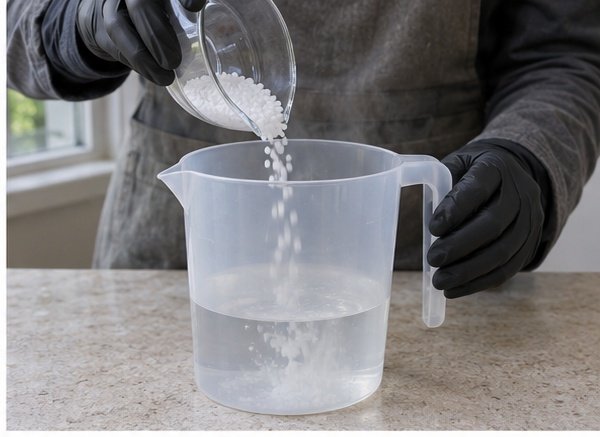
Illustrative lye setup; follow the written direction to add NaOH to water, then let the solution cool safely. - 03
Melt and combine the oils. Thoroughly melt and stir the palm oil before weighing its 150 g portion. Melt the coconut oil, then combine it with the remaining olive oil and castor oil; keep the 20 g reserved olive oil in its two additive cups. Aim for the oils and lye solution to be about 38–43°C (100–110°F), with hard fats fully liquid. Slowly pour the lye solution into the oils and alternate brief submerged blender pulses with hand stirring until the batter is evenly emulsified and reaches a light trace.
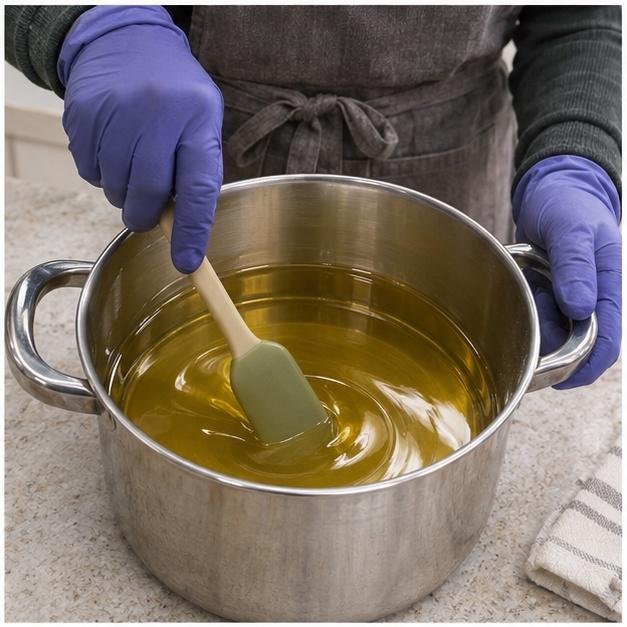
Illustration: melt and combine the measured oils while keeping hard fats liquid. - 04
Add the oatmeal slurry. Scrape the entire smooth oatmeal-and-oil slurry into the emulsified batter and stir it through by hand. Check the sides and bottom for clumps. Add the prepared slurry, not a heap of dry oatmeal powder.
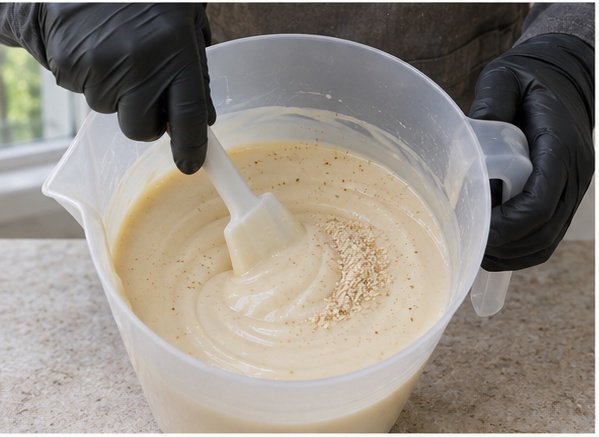
Illustration: stir in the smooth oatmeal slurry; do not add dry powder as a pile. - 05
Divide and color. Split the batter approximately in half. Stir the brown mica dispersion into one half and leave the other half cream. Work promptly and aim for a soft, spoonable consistency; if the batter is already evenly emulsified and thickening, stop powered blending.
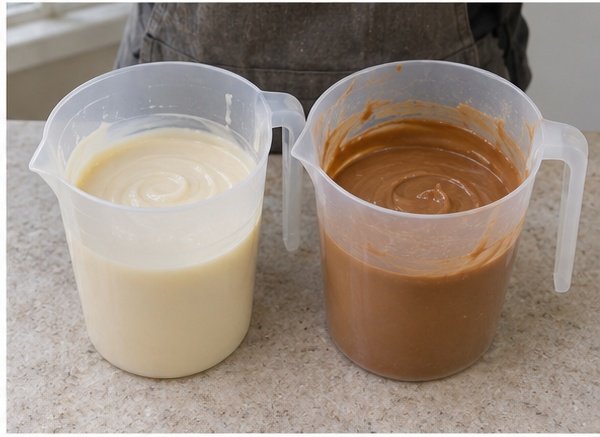
Illustration: color one half brown and keep the other half cream. - 06
Spoon-plop the pattern. Alternate generous spoonfuls of brown and cream batter along the mold, gently pressing batter into the corners. When the mold is filled, make one shallow pass across the top with a spoon. Do not churn the whole loaf; tap the mold lightly on a protected counter to settle larger air pockets.
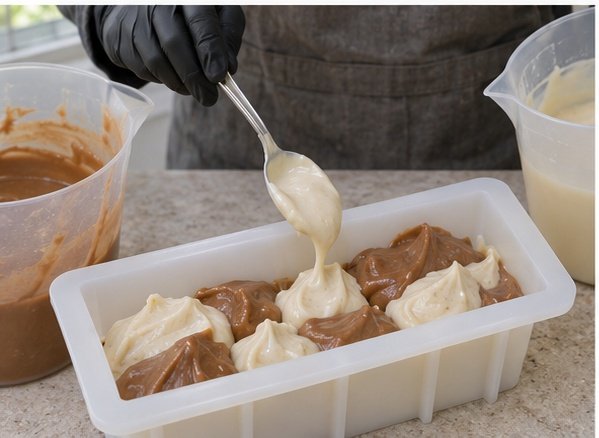
Illustration: alternate large spoonfuls for a relaxed two-tone pattern. - 07
Unmold, slice, and cure. Check the loaf after 24–48 hours and wait longer if it dents or sticks. Wearing gloves, unmold only when it releases cleanly and holds its shape, then cut bars about 2.5 cm (1 inch) thick on a stable surface. Space them on a nonreactive rack in a dry, ventilated place for 4–6 weeks, turning periodically.
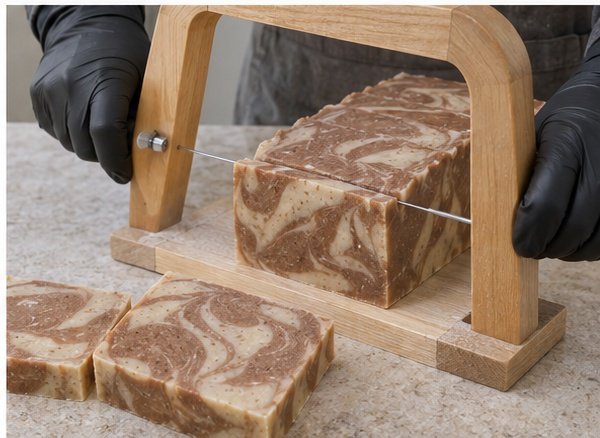
Illustration: wait until the loaf holds its shape, then cut and cure the new bars.
05 /
Cure, troubleshoot, and plan gifts
Record the batch date and exact ingredients, including the colloidal oatmeal and colorant. Curing improves firmness but cannot correct a lye-weighing error or an incompletely mixed batch. Wrap only dry, cured bars in breathable paper and include an accurate ingredient list.
Allow at least six weeks before gifting, plus time to assess the bars. Do not promise readiness from the calendar alone. Because this recipe contains oats, do not give it to someone with an oat allergy; avoid sensitive-skin or treatment claims.
| What you notice | What to check next time |
|---|---|
| Visible oatmeal lumps | Disperse the colloidal oatmeal into a smooth oil slurry and scrape it into the whole batch. |
| Batter thickens quickly | Powders and mixing can shorten working time. Stop once evenly emulsified and use the spoon-plop pattern while it remains workable. |
| Brown looks lighter or darker | Mica color varies by supplier and dose. Use a cold-process-rated colorant at its stated rate and test small changes. |