The batch at a glance
Cold-process soap formula
- Yield
- About 6–8 bars, depending on cut size
- Total oils
- 500 g
- Superfat
- 5%
- Cure
- 4–6 weeks
- Fragrance
- Lavender fragrance oil, weighed from calculator results
| Ingredient | Amount | Oil share |
|---|---|---|
| Olive oil | 200 g | 40% |
| Palm oil (regular palm) | 150 g | 30% |
| Coconut oil (76°) | 125 g | 25% |
| Castor oil | 25 g | 5% |
| Sodium hydroxide (NaOH)Amount assumes 100% NaOH purity. | 70.66 g | — |
| Distilled waterCalculator baseline with fragrance off; use the validated scented result if fragrance is selected. | 160.95 g | — |
| Lavender fragrance oilChoose the exact supplier product and check its usage limit and handling notes. | Use the final calculator amount | — |
| Lilac and deep-plum micaOptional; use colorants rated for cold-process soap and stay within supplier rates for each colored portion. | About ⅛ tsp each | — |
- Reserve about 1 teaspoon of the measured olive oil for each mica dispersion; do not add this oil on top of the 200 g.
- SoapSpice’s light, medium, and strong fragrance levels are general scent guides, not IFRA maximums. Follow the exact fragrance supplier’s safe-use limit.
The NaOH amount is calculator-checked for this 500 g oil blend at 5% superfat and assumes 100% NaOH purity. The listed water is the calculator baseline with fragrance off; selecting a fragrance changes the water estimate. Choose the exact fragrance and strength in the calculator, then verify its supplier usage limit and all material specifications.
Recalculate this batch in SoapSpice01 /
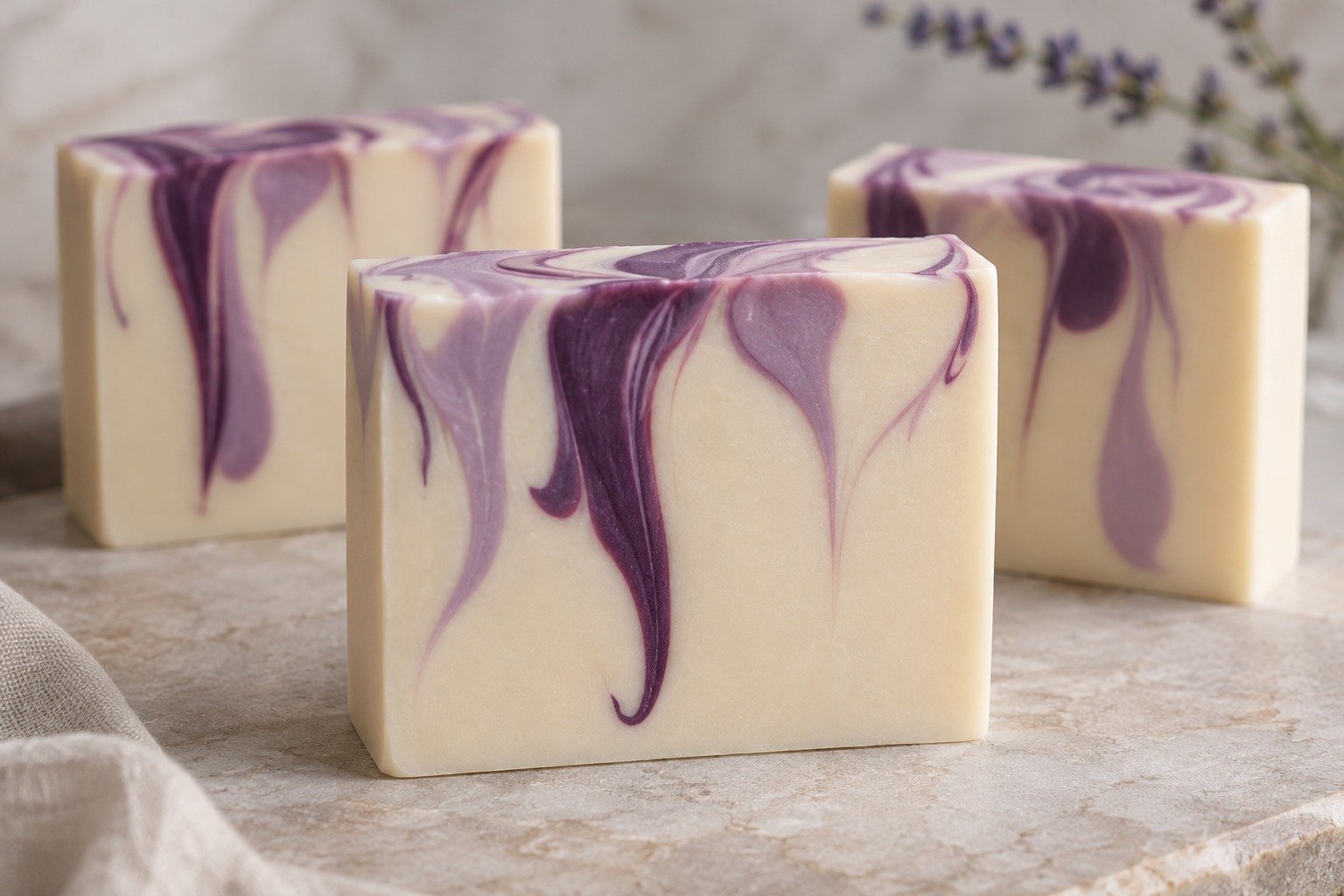
What makes the lavender drop swirl?
This cold-process loaf starts with a cream-colored soap base. Two small portions are colored lilac and deep plum, then poured into the mold from different heights: the higher stream pushes deeper into the batter, while the lower stream leaves a shallower ribbon.
The finished pattern varies with batter thickness, pouring speed, and the way the colored streams move through the loaf. Prepare the colors and mold before blending so the batter stays fluid enough to pour.
02 /
Set the fragrance amount in the calculator
This recipe provides a 500 g oil blend and a 5% superfat. Its listed 70.66 g NaOH and 160.95 g distilled water are the calculator results with fragrance off. The calculator’s water estimate changes when fragrance is selected, while the NaOH amount remains the same for this oil blend and setting.
- Choose grams and enter 200 g olive oil, 150 g regular palm oil, 125 g 76° coconut oil, and 25 g castor oil.
- Set superfat to 5%, choose distilled water, add the exact lavender fragrance product you plan to use, and select light, medium, or strong.
- Check the fragrance supplier’s safe-use rate for cold-process, rinse-off soap. The calculator strength guide is not a substitute for that limit.
- Validate the formula and use the displayed NaOH, water, and fragrance weights. Recalculate if you change an oil, weight, or setting.
03 /
Equipment and lye safety
Gather a scale readable to 0.01 g, thermometer, stick blender, stainless-steel pot, lye-rated heat-resistant plastic pitcher, two spouted pouring cups, silicone spatula, and a silicone loaf mold with enough room for the batter.
Wear splash goggles, chemical-resistant gloves, and long sleeves. Work with good ventilation and keep children and pets out of the work area. Use stainless steel or lye-rated plastic for NaOH contact; keep glass and aluminum out of the lye setup.
- Weigh every ingredient; do not substitute volume measures for the oils, NaOH, water, or fragrance.
- Slowly add NaOH to the distilled water while stirring—never pour water onto dry NaOH. Keep your face away from vapors and let the solution cool in a secure, ventilated place.
- Follow the NaOH and fragrance suppliers’ handling instructions, and keep lye solution and raw batter away from skin and eyes.
04 /
Make the lavender drop swirl
Set out the mold, prepared colors, and measured fragrance before you begin. Work carefully through each stage in order.
- 01
Set the loaf mold on a level surface. Mix each mica separately with about 1 teaspoon of olive oil reserved from the measured 200 g. Weigh the final calculator fragrance amount into a separate cup.
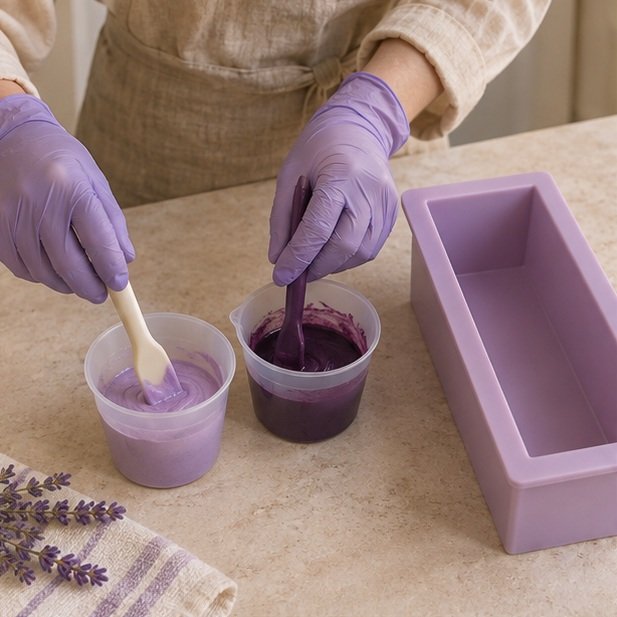
Guide illustration from the supplied recipe: prepare the mold and both mica colors. - 02
Slowly sprinkle the weighed NaOH into the distilled water while gently stirring. Keep your face back from the rising vapors, then leave the solution to cool in a secure, ventilated area.
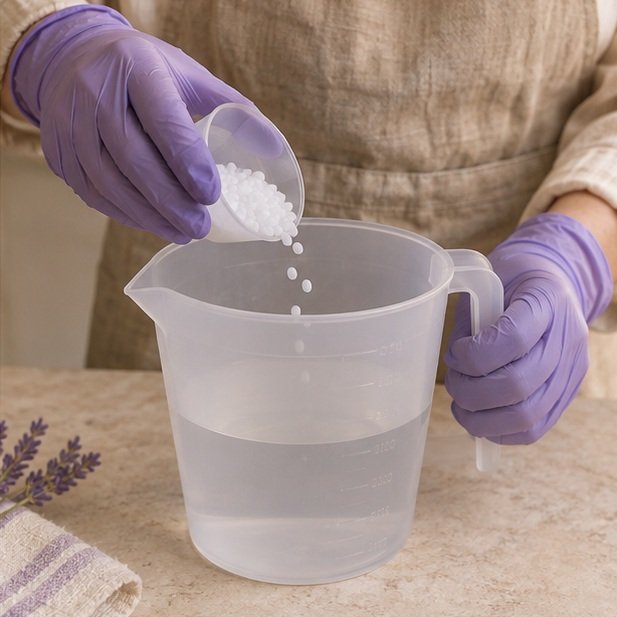
Guide illustration from the supplied recipe: add sodium hydroxide to water and let it cool safely. - 03
If using bulk palm oil, melt and stir it thoroughly before weighing. Melt the palm and coconut oils, then stir in the castor oil and remaining olive oil. Aim for roughly 100–110°F (38–43°C) for both oils and lye solution, with the oils fully liquid.
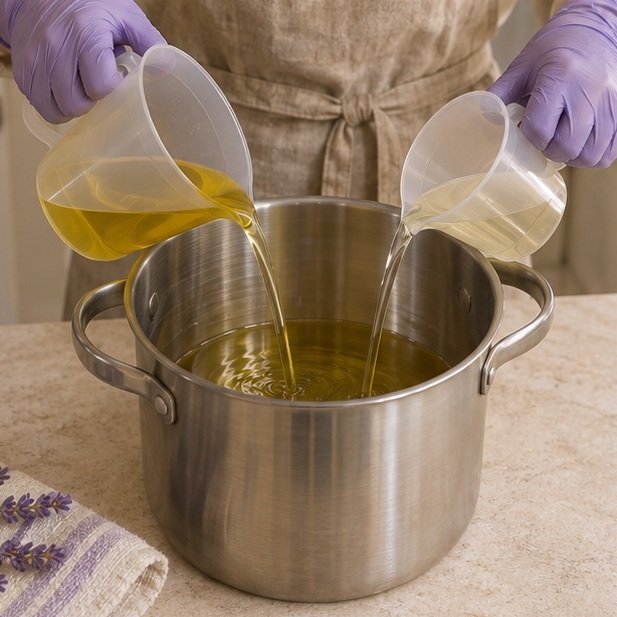
Guide illustration from the supplied recipe: combine the measured oils. - 04
Pour the lye solution into the oils. Use short stick-blender pulses and hand stirring until the batter is uniformly emulsified and still fluid at light trace. Stir in the fragrance by hand, following the supplier’s acceleration guidance.

Guide illustration from the supplied recipe: blend to light trace, then stir in fragrance. - 05
Pour about 100 g of batter into each spouted cup. Mix lilac into one and deep plum into the other. Pour the remaining cream-colored batter into the loaf mold.
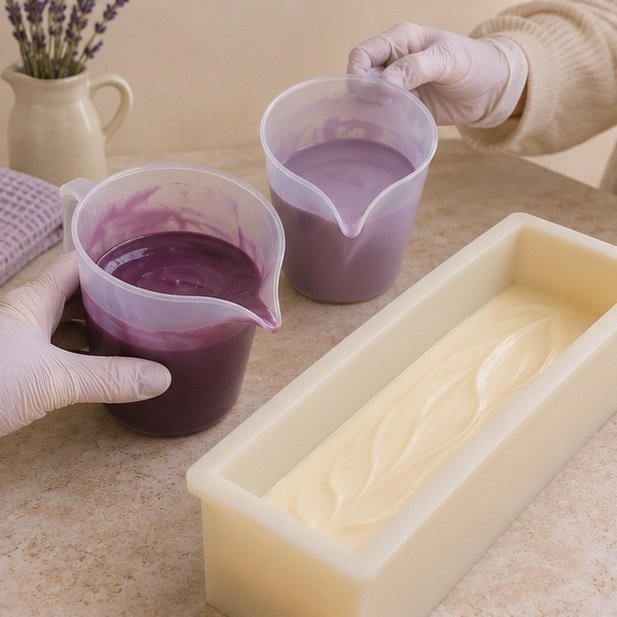
Guide illustration from the supplied recipe: color two portions and keep the rest cream. - 06
Pour a thin plum stream along the loaf from several inches above the surface to push it deeper. Pour the lilac stream closer to the surface for a shallower ribbon. Repeat along different parts of the mold. Use remaining colored batter for a few lines on top, then lightly draw a skewer through the surface.
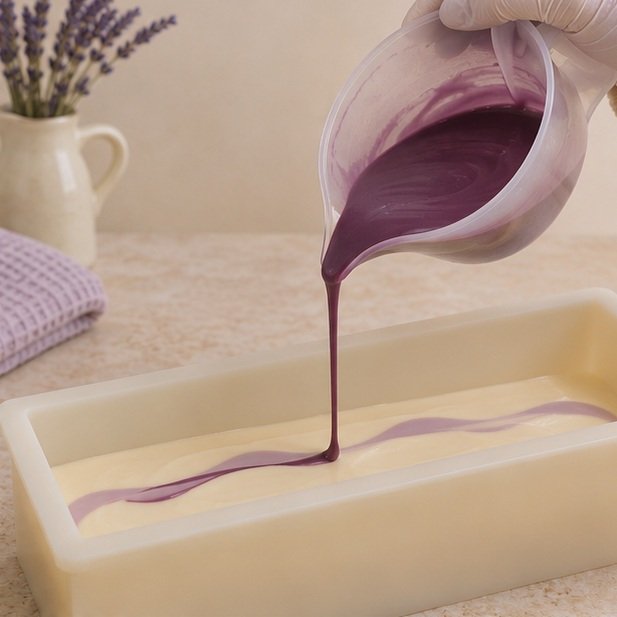
Guide illustration from the supplied recipe: pour the colored streams at different heights. - 07
Check the loaf after 24–48 hours. With gloves on, unmold and slice when it releases cleanly and holds its shape. If it dents easily, check it again the next day. Space the bars on a rack in a dry, ventilated spot out of direct sun for a 4–6 week cure.
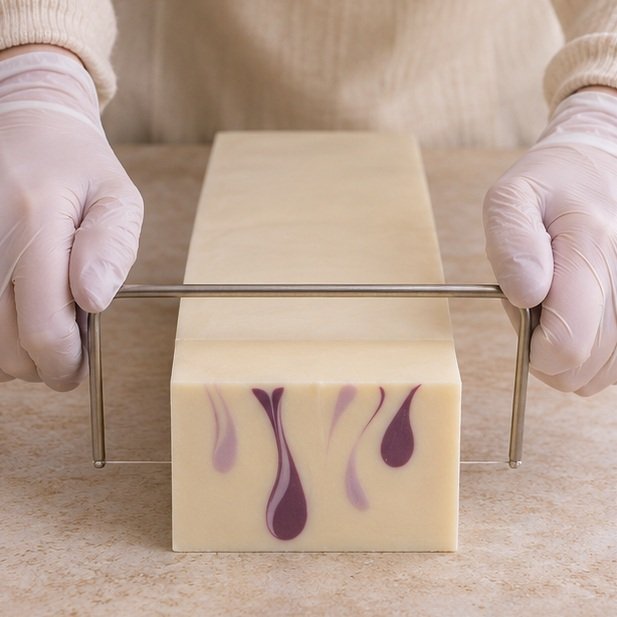
Guide illustration from the supplied recipe: slice the loaf once it holds its shape. 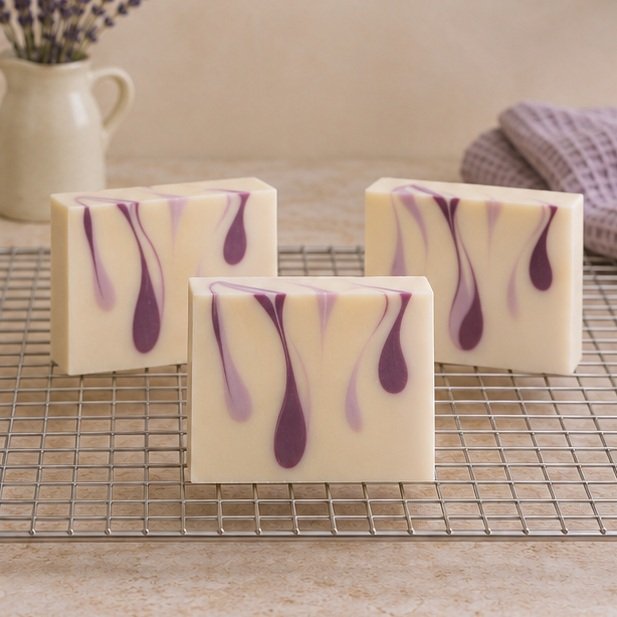
Guide illustration from the supplied recipe: leave airflow around curing bars.
05 /
Troubleshoot the swirl
If the colored swirl sits mostly on top, the batter may have thickened before pouring. Use short blender pulses, stop at a fluid light trace, and have the two colored portions ready before you start. A slightly higher pour can help a stream sink while the base is still fluid.
Lavender fragrance oils can differ in acceleration and discoloration. Check the exact supplier product notes and prepare your colors before adding fragrance so you can pour promptly if the batter thickens.