The batch at a glance
Cold-process soap formula
- Yield
- One 500 g oil batch
- Total oils
- 500 g
- Superfat
- 5%
- Cure
- About 6 months
- Fragrance
- Unscented
| Ingredient | Amount | Oil share |
|---|---|---|
| Plain olive oil | 500 g | 100% |
| Sodium hydroxide (NaOH)Assumes 100% NaOH purity. | 64.13 g | — |
| Distilled waterSoapSpice’s 22% complete-batch estimate. | 159.11 g | — |
- Use plain regular olive oil. Pomace and other grades may use different SAP references, so select the matching calculator entry.
- The water amount is SoapSpice’s disclosed starting baseline, not an ideal amount for every formula or process.
The NaOH amount matches 500 g of regular olive oil at SoapSpice’s current 0.135 SAP reference and 5% superfat, assuming 100% NaOH purity. Calculator-checked, not physically batch-tested; verify the oil grade, supplier SAP, NaOH purity, and weights before making.
Recalculate this batch in SoapSpice01 /
A simple Castile bar with one oil
This SoapSpice recipe keeps the oil blend simple: olive oil is the only base oil. It makes an unscented, uncolored cold-process bar, so you can focus on the basic process without fragrance or optional additives.
Olive-oil batter can take longer to reach trace than some blends. Give it time, keep the stick blender submerged, and use short pulses with hand stirring between them.
02 /
Check the formula in the calculator
The listed NaOH amount uses the calculator’s regular olive-oil SAP reference, a 5% superfat, and the assumption that the NaOH is 100% pure. The distilled-water amount follows SoapSpice’s disclosed estimate of about 22% of the complete pre-saponification batch.
- Choose grams (g) and add 500 g of plain regular olive oil.
- Set superfat to 5%, choose distilled water, and leave fragrance off.
- Validate the formula. If you change the oil grade, batch size, or settings, use the newly calculated weights instead.
03 /
Gather equipment and prepare safely
Set out a digital scale readable to 0.01 g, a thermometer, a stainless-steel mixing bowl, a lye-rated heat-resistant plastic pitcher, an immersion blender, a spatula, and a silicone loaf mold.
Wear splash goggles, chemical-resistant gloves, and long sleeves. Work with good ventilation, away from children and pets. Use stainless steel or lye-rated plastic for NaOH contact; do not use glass or aluminum. Long sleeves can be clothing you already own.
- Keep the NaOH dry until you are ready to weigh and mix it.
- Always add NaOH slowly to the distilled water while stirring—never pour water onto dry NaOH. Keep your face back from the solution and let it cool in a secure, ventilated place.
- Follow the NaOH supplier’s handling instructions and keep the solution and raw batter away from skin and eyes.
04 /
Make olive oil soap in six steps
Gather everything first and work through these stages in order. Do not leave NaOH or raw soap batter unattended.
- 01
Weigh the olive oil, distilled water, and NaOH separately. Tare the scale with each empty container. Put on splash goggles, gloves, and long sleeves before opening the NaOH.
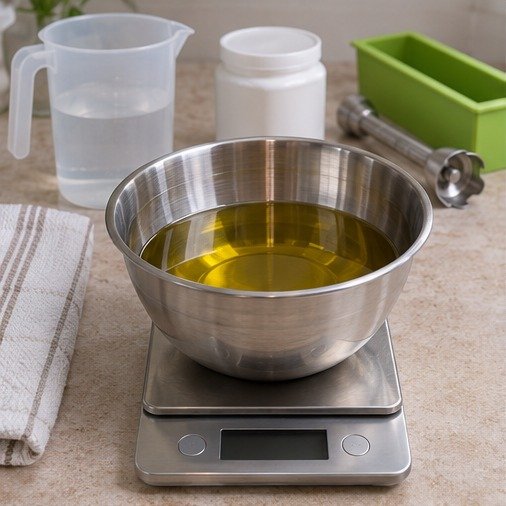
AI-generated guide illustration: weigh the oil, water, and sodium hydroxide separately. - 02
Set the lye-safe pitcher on a stable surface. Slowly add the NaOH to the distilled water while stirring. Keep your face back, then leave the solution to cool in a secure, ventilated spot.
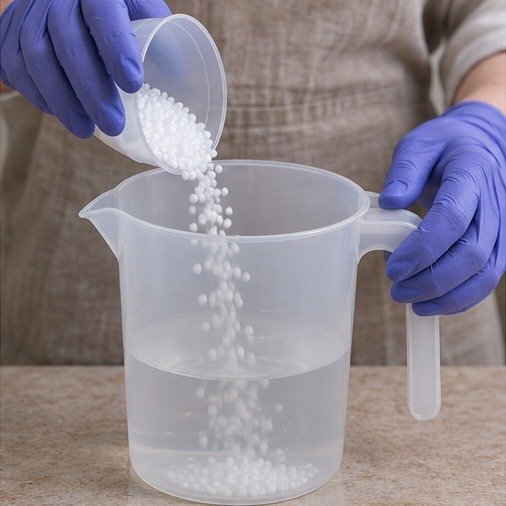
AI-generated guide illustration: add sodium hydroxide to water, never water to sodium hydroxide. - 03
Once the solution is about 100–110°F (38–43°C), gently warm the olive oil to a similar temperature if needed. Carefully pour the solution into the oil. Keep the blender head submerged and alternate short pulses with hand stirring until a drizzle briefly leaves a faint line.
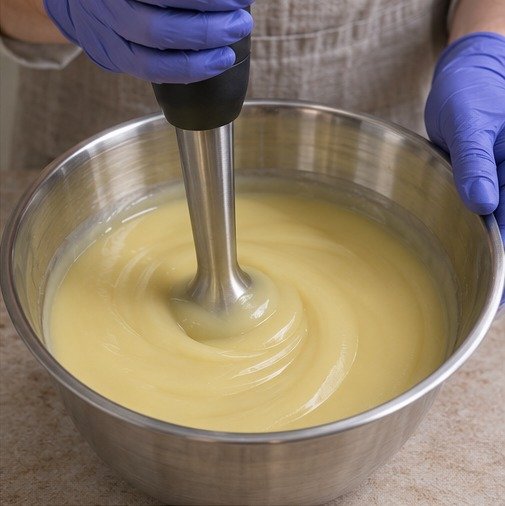
AI-generated guide illustration: blend until the batter reaches a uniform light trace. - 04
Pour the batter into a silicone loaf mold on a flat, level surface. Leave it undisturbed in a secure place while it firms.
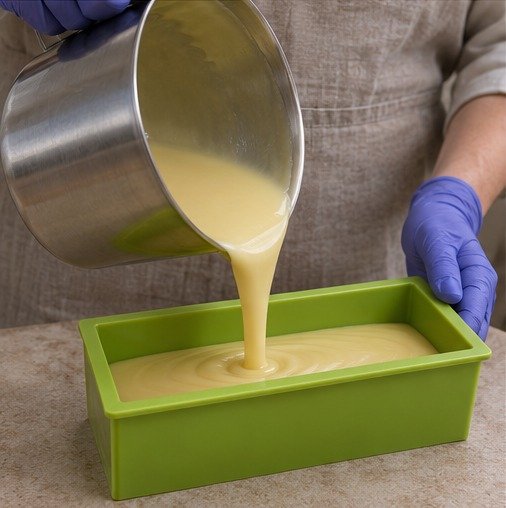
AI-generated guide illustration: pour the batter into a level loaf mold. - 05
Check the loaf after about 48 hours. Wearing gloves, gently peel back the mold. If the loaf dents or sticks, wait another day; slice once it releases cleanly and holds its shape.
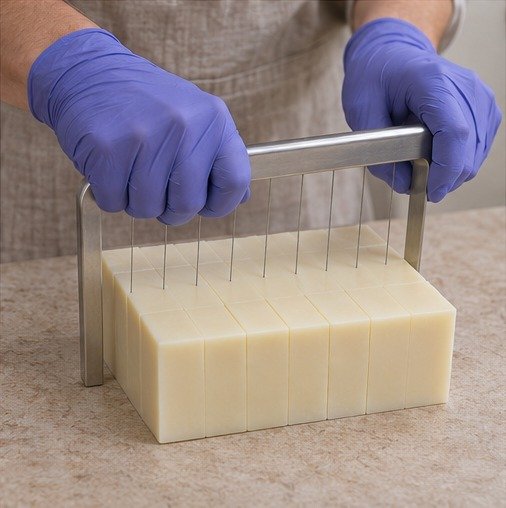
AI-generated guide illustration: unmold and slice once the loaf holds its shape. - 06
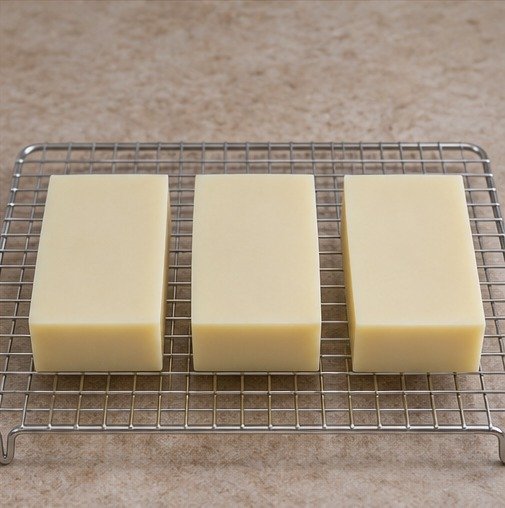
Place the bars apart on a rack in a dry, airy place away from direct sunlight. Allow about six months of cure for a firmer, longer-lasting Castile bar; humid conditions need plenty of airflow.
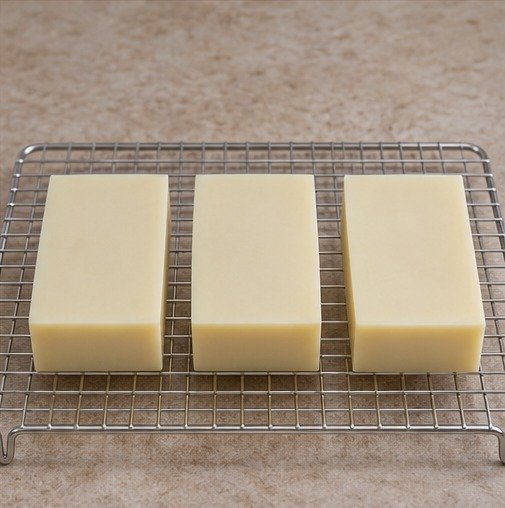
AI-generated guide illustration: leave air space around bars as they cure.
05 /
Give Castile soap a long cure
Olive-oil-only bars can feel soft when first unmolded. Space them apart on a rack and keep air moving around each bar while they cure for about six months. A dry location out of direct sunlight helps the bars cure evenly.
The illustrations in the supplied guide are AI-generated. They show example stages only; they are not photographs of a batch made from this formula.
06 /
Common questions
Is this recipe scented or colored? No. It intentionally uses no fragrance or colorant, so neither needs to be purchased for this batch.
Can I substitute olive pomace oil? Do not assume the same lye amount. Pomace and other grades can use different SAP references; choose the matching oil in SoapSpice and validate the formula again.