
01 /
Start with the bar you want
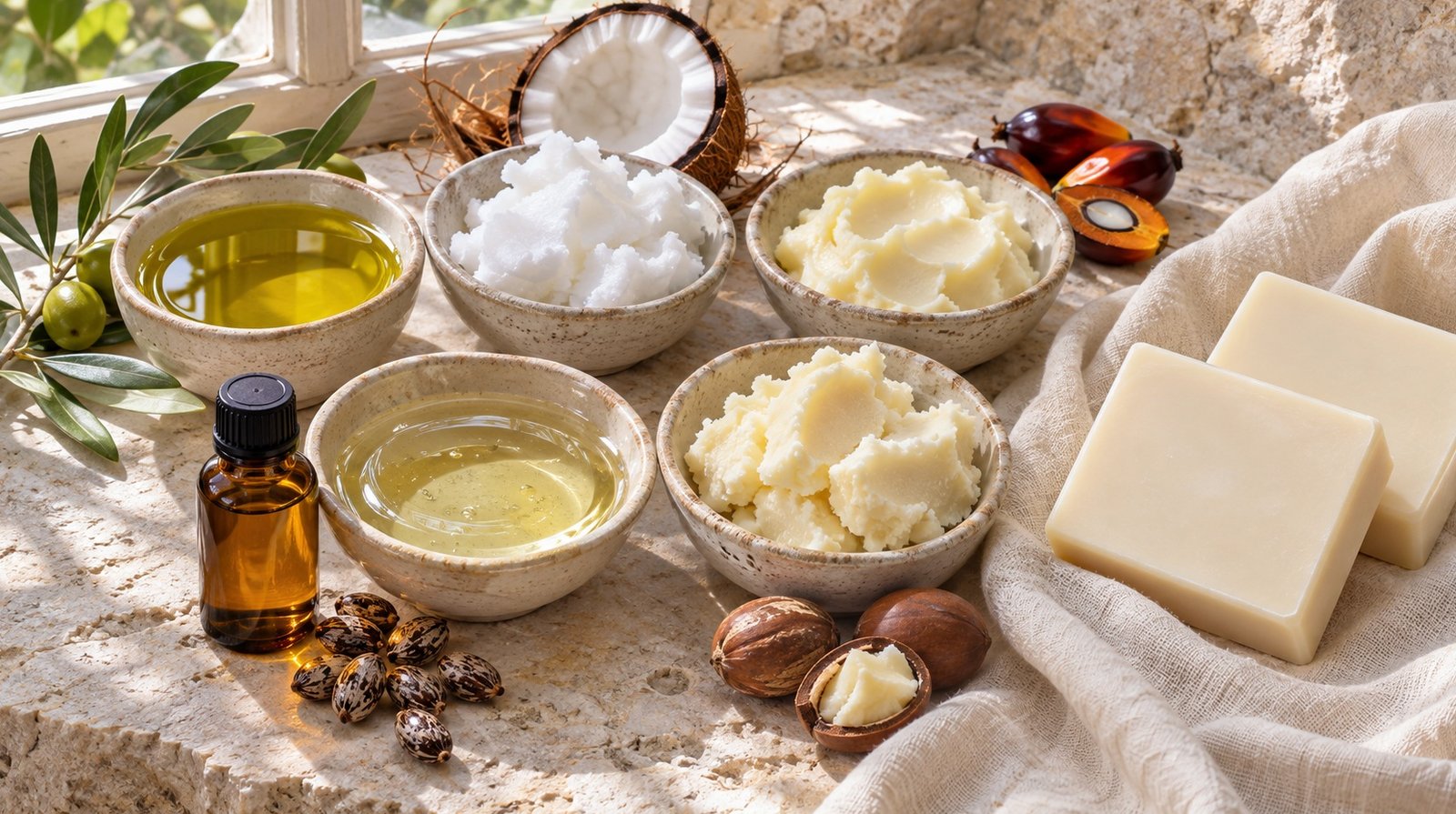
A beautiful soap starts with the oils underneath the color. A recipe that cuts neatly, lathers generously, and lasts between washes comes from choosing ingredients with complementary jobs. You can build that understanding with five familiar oils and butters.
Before opening the calculator, write a short brief: “a firm everyday bar,” “more time for swirls,” or “a small unscented batch.” Then choose a base blend and test it. Keep the oil percentages, water setting, process, and cure in your notes so you can understand the result.
Soapmaking uses sodium hydroxide to transform oils into soap. The raw oil’s feel is only part of the story. Judge the finished, cured bar by its lather, wash feel, release from the mold, and durability. [1]
02 /
Five ingredients, different jobs
Use this comparison to start a blend, then consider how each ingredient works with the others.
| Ingredient | Main contribution | A useful question |
|---|---|---|
| Olive oil | A slower-setting base with small, creamy lather | Am I allowing enough time to mature? |
| Coconut oil | Large bubbles, cleansing, and hardness | How does the cured blend feel in use? |
| Palm oil | Firmness and structure | Have I selected palm oil correctly? |
| Castor oil | Lather support at a small proportion | Is this a supporting ingredient? |
| Shea butter | Firmness and a richer lather character | What changes when I add a little butter? |
03 /
Hard oils and soft oils
Soapmakers often call fats that are solid at typical room temperature “hard oils,” and liquid ones “soft oils.” Coconut, palm, and shea fall in the first group; olive and castor in the second. The terms help organize a blend, but the finished bar depends on the whole formula and its cure.
If you make soap in a warm climate, coconut oil may arrive liquid. That physical change does not turn ordinary coconut oil into fractionated coconut oil. Use the calculator entry that matches the actual product.
04 /
Read the table as a design guide
The contributions overlap. Coconut and palm both help firmness but produce different soap profiles. Castor can support lather in a small amount, yet increasing it does not automatically make a better bar. Your goal is a blend whose ingredients work together. [2,3]
Percentages refer to the total oil weight. For 500 g of oils, 5% is 25 g. The lye, water, color, and fragrance are recorded separately.
05 /
Choose your base and bubbles
Olive oil is a familiar foundation for cold-process soap. At very high proportions, expect patience: all-olive Castile soap is known for its long cure and small, sometimes slippery lather. [3] Choose it when you want olive oil as a substantial part of the base and can allow the soap time to develop. Select the matching olive oil entry and check supplier data; an oil change belongs in the calculator before it belongs in the pot.
Coconut oil helps create large bubbles and a hard, cleansing bar. High proportions can feel drying for some users. [3] It can be a bubbly part of a balanced blend, but more bubbles alone do not tell you how the full recipe will feel. Ordinary 76° coconut and fractionated coconut are different ingredients.
Palm oil supplies structure and helps bars release from the mold. It is often paired with coconut and liquid oils. [2] Choose it as a firming component in a multi-oil recipe. Palm oil and palm kernel oil require separate choices; for bulk palm oil, follow supplier directions for melting and mixing before portioning.


06 /
Support the lather and texture
Castor oil is commonly used as a supporting oil for lather. Bramble Berry suggests 2–5% as a lather option in its substitution guide. [2] Larger amounts can soften the bar, so weigh it carefully and keep the entire blend in view. [3]
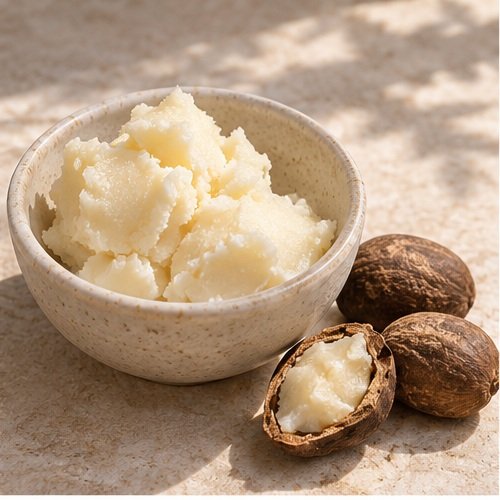
Shea butter adds a firming butter component to cold-process soap. Soap Queen’s beginner guide recommends using it up to 15%; the best amount depends on the complete recipe. [4] It can be a useful small-batch variation. Fully melt and combine it as the recipe requires, and recalculate when replacing another oil with shea.

07 /
Keep a useful comparison notebook
Use the same mold and bar thickness. Label each batch with the formula and date. After curing, compare the bars with the same water and wash method. Record bubble size, creaminess, hardness, and how the bar dries between uses. A clear test question helps: “What changes when 5% of the olive oil becomes shea?”
Make that variation only after recalculating it. The comparison is about learning the blend, not adding a new oil to an already weighed batch.
08 /
Build an example in SoapSpice
This 500 g example uses olive as the base, palm for structure, coconut for bubbles, and castor for lather support. It is a teaching formula, with a design goal of a firm everyday bar. Its finished performance still needs a physical test batch.
| Calculator entry | Share of oils | Weight |
|---|---|---|
| Olive oil | 45% | 225 g |
| Palm oil | 30% | 150 g |
| Coconut oil (76°) | 20% | 100 g |
| Castor oil | 5% | 25 g |
| Total oils | 100% | 500 g |
09 /
Enter, validate, and record
The earlier SoapSpice check for this blend recorded 69.52 g sodium hydroxide (NaOH) at 5% superfat and 160.63 g distilled water. Recheck the current calculator result and supplier specifications before weighing.
SoapSpice assumes 100% NaOH purity and estimates water at about 22% of the complete batch. A different purity or oil SAP value needs attention before making. These values explain the example; use a complete cold-process method and lye-handling instructions for the actual batch.
- 01
Open the SoapSpice cold-process calculator and select grams.
- 02
Add the four oil entries exactly as listed and enter 225, 150, 100, and 25 g.
- 03
Set superfat to 5%, select distilled water, and choose unscented for the example.
- 04
Select Validate formula. Confirm the result and verify supplier specifications before weighing.
10 /
Try a shea variation on paper first
Replace 25 g of olive oil with 25 g of shea butter: use 200 g olive oil, 150 g palm, 100 g coconut, 25 g castor, and 25 g shea. The total stays 500 g, with shea at 5%. Run this new formula through SoapSpice for fresh lye and water amounts. Test it separately and compare after curing. [2]
11 /
Can I swap oils gram for gram?
An equal weight keeps the batch size the same, but the lye requirement and bar properties may change. Enter the new oil and weight in the calculator and validate the whole formula again. Even similar oils deserve a fresh calculation. [2]
12 /
Do I need expensive specialty oils?
Start with ingredients you can identify, source consistently, and measure accurately. A simple formula makes it easier to understand what changed. Add a specialty ingredient when you have a specific test in mind.
13 /
How much superfat should I choose?
Use the setting in a suitable recipe and keep it consistent when comparing oil blends. Changing superfat at the same time changes another variable, making the comparison harder to interpret.
14 /
What about fragrance and color?
Treat them as recorded additions. Reserve oil for mica from the measured oil total and return it with the color. Choose the exact fragrance supplier product, verify its soap usage guidance, and revalidate the formula. Fragrance behavior can affect the time available for a swirl.
15 /
Store ingredients for the next batch
Keep labels, lot details, and supplier specifications with your recipe records. Follow the supplier’s storage advice, close containers promptly, and inspect ingredients before using. Choose a cool, dark place appropriate to the product.