The batch at a glance
Cold-process soap formula
- Yield
- About 6–8 bars, depending on cut size
- Total oils
- 500 g
- Superfat
- 5%
- Cure
- 4–6 weeks
- Fragrance
- Unscented
| Ingredient | Amount | Oil share |
|---|---|---|
| Olive oil | 200 g | 40% |
| Palm oil (regular palm) | 150 g | 30% |
| Coconut oil (76°) | 125 g | 25% |
| Castor oil | 25 g | 5% |
| Sodium hydroxide (NaOH)Assumes 100% NaOH purity. | 70.66 g | — |
| Distilled waterSoapSpice’s disclosed 22% complete-batch water baseline for this unscented setup. | 160.95 g | — |
| Colloidal oatmeal1% of total oil weight; this additive is not included in the oil total. | 5 g | — |
- Mix the 5 g of colloidal oatmeal with about 10 g of olive oil taken from the measured 200 g; do not add extra oil to the recipe.
- The distilled-water amount is a disclosed starting baseline, not an ideal amount for every formula or process. Recalculate if you change the oils, weights, or settings.
- This recipe is unscented and uncolored; no fragrance or mica is needed.
This SoapSpice planning formula uses the current SAP references for the listed oils at 5% superfat and assumes 100% NaOH purity. Confirm the exact oil types and supplier specifications, then validate the formula in the calculator before weighing.
Recalculate this batch in SoapSpice01 /
A simple unscented oatmeal bar
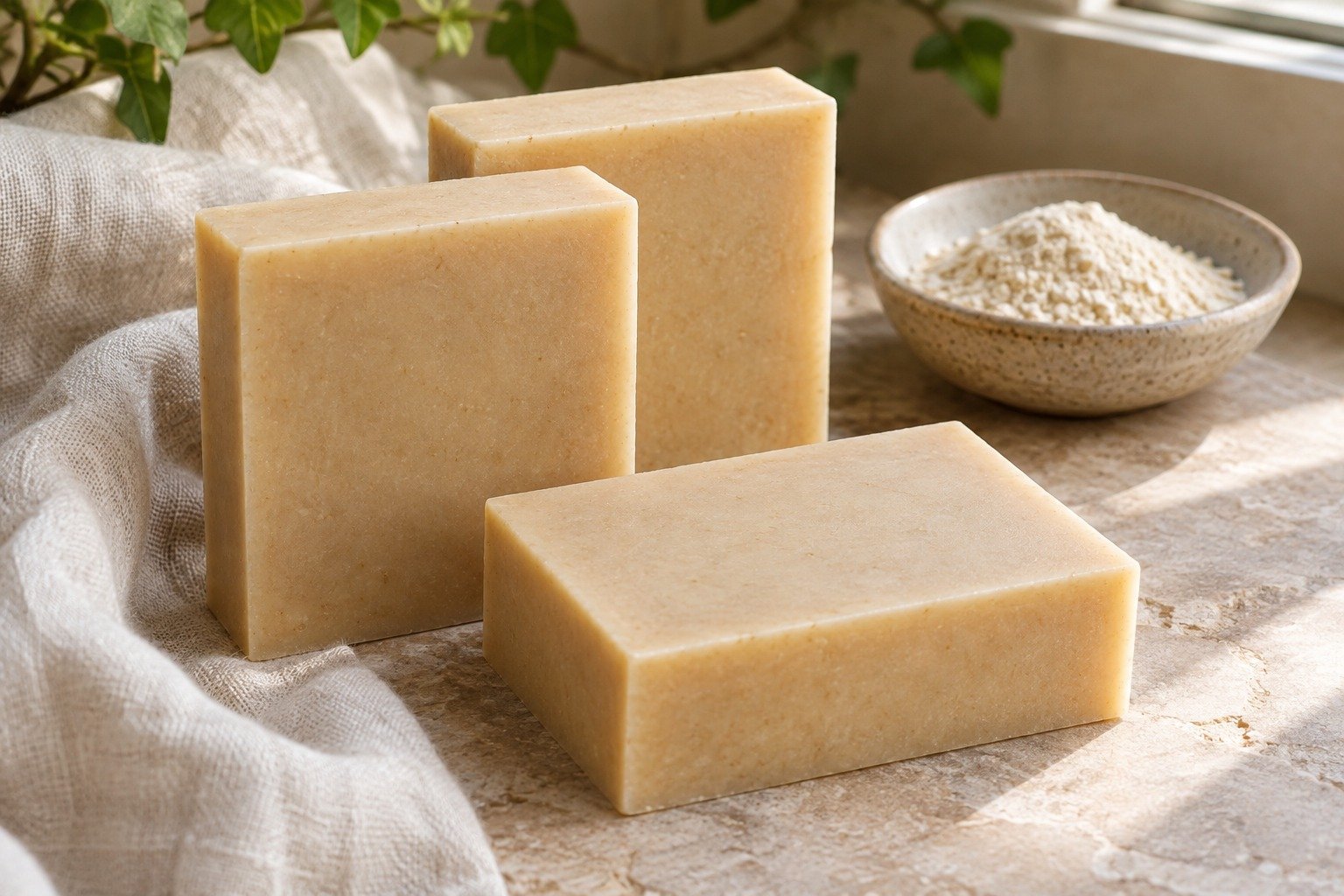
This cold-process recipe starts with a 500 g blend of olive, palm, coconut, and castor oils, then adds 5 g of finely milled colloidal oatmeal. The oatmeal gives the batter a soft beige appearance without fragrance or added colorants.
Colloidal oatmeal is an additive, not a base oil, so it does not change the oil percentages in the formula. The recipe artwork is illustrative; real bars may differ in color, texture, and shape.
02 /
Check the formula before weighing
The sodium hydroxide amount is calculated for the listed oils at 5% superfat, assuming 100% NaOH purity. The water amount follows SoapSpice’s disclosed 22% complete-batch baseline. Validate the current numbers in the calculator before making a batch.
- Choose grams (g), regular palm oil, 76° coconut oil, olive oil, and castor oil.
- Enter 200 g olive oil, 150 g regular palm oil, 125 g 76° coconut oil, and 25 g castor oil. Set superfat to 5% and choose distilled water.
- Keep colloidal oatmeal separate from the oil blend and weigh it as an additive.
- Verify the oil types, supplier SAP information, NaOH purity, and every measured weight before starting.
03 /
Gather tools and prepare safely
Set out a digital scale readable to 0.01 g for the NaOH, a thermometer, stick blender, silicone spatula, stainless-steel mixing pot, lye-rated heat-resistant plastic pitcher, and an approximately 800 mL silicone loaf mold.
Wear splash goggles, chemical-resistant gloves, and long sleeves before handling sodium hydroxide (NaOH, commonly called lye) or raw soap batter. Work with good ventilation, keep children and pets away, and use dedicated soapmaking equipment.
- Use stainless steel or lye-rated heat-resistant plastic for NaOH contact. Do not use glass or aluminum.
- Slowly add NaOH to the distilled water while stirring—never pour water onto dry NaOH. Keep your face away from the vapors.
- Follow the NaOH supplier’s handling instructions and keep the solution and raw batter away from skin and eyes.
04 /
Make the oatmeal soap in six steps
Prepare the mold and measure each ingredient before you begin. Keep protective gear on while handling the lye solution and raw batter.
- 01
Set the silicone loaf mold on a level surface. Weigh the oils, NaOH, water, and colloidal oatmeal separately. Stir the 5 g of oatmeal into about 10 g of olive oil reserved from the measured 200 g until smooth.
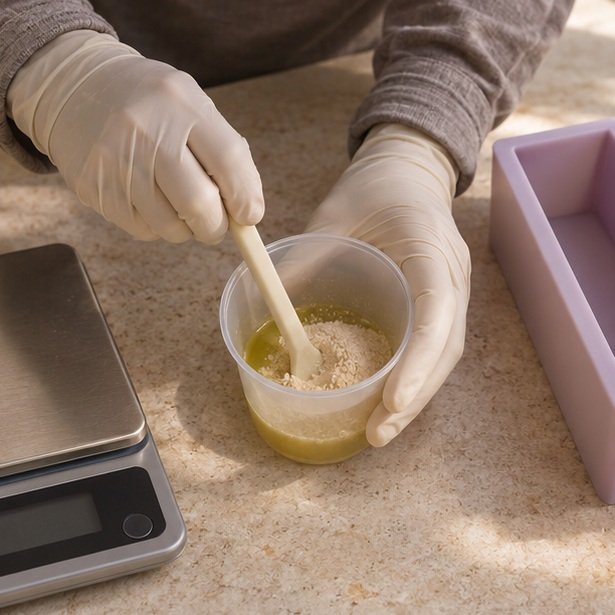
AI-generated illustration: prepare a smooth oatmeal slurry with reserved olive oil. - 02
Mix the lye solution. Slowly sprinkle the NaOH into the distilled water while stirring gently. Keep your face back from the rising vapors and let the solution cool in a secure, ventilated place.
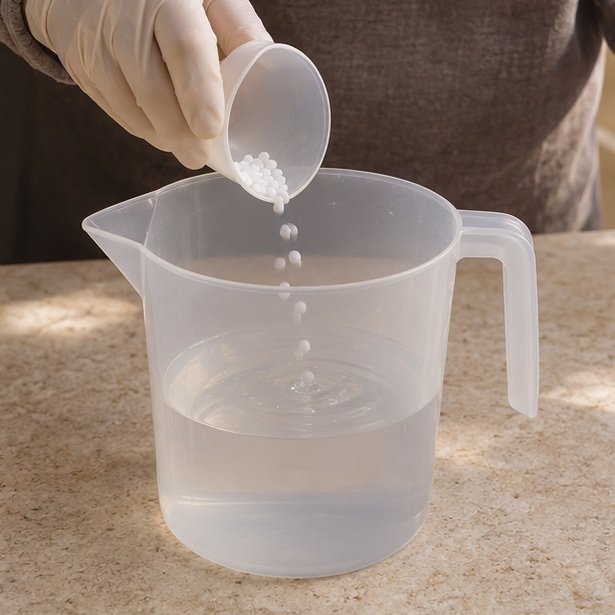
AI-generated illustration: add sodium hydroxide to water, never water to sodium hydroxide. Wear full protective gear. - 03
Combine the oils. If using bulk palm oil, melt and stir it thoroughly before measuring. Gently melt the palm and coconut oils, then stir in the castor oil and remaining olive oil. Let both the oils and lye solution reach about 100–110°F (38–43°C), keeping the oils fully liquid.
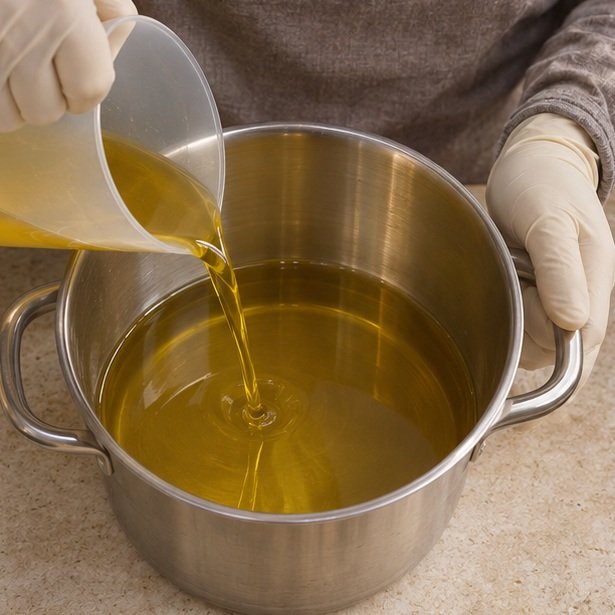
AI-generated illustration: combine the measured oils in a stainless-steel pot. - 04
Blend to light trace. Carefully pour the lye solution into the oils. Alternate short stick-blender pulses with hand stirring until the batter is uniform and a drizzle briefly leaves a faint line. Stir in the oatmeal slurry until evenly distributed.
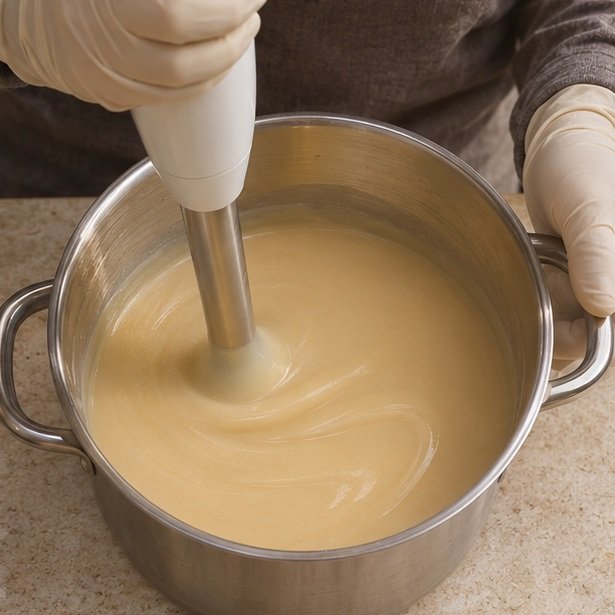
AI-generated illustration: alternate short blender pulses and hand stirring to reach light trace. 
AI-generated illustration: stir the oatmeal slurry through the batter evenly. - 05
Pour the batter into the mold and leave the loaf in a secure place. Check it after 24–48 hours. Wearing gloves, unmold and slice once it releases cleanly and holds its shape; if it sticks or dents easily, give it another day.
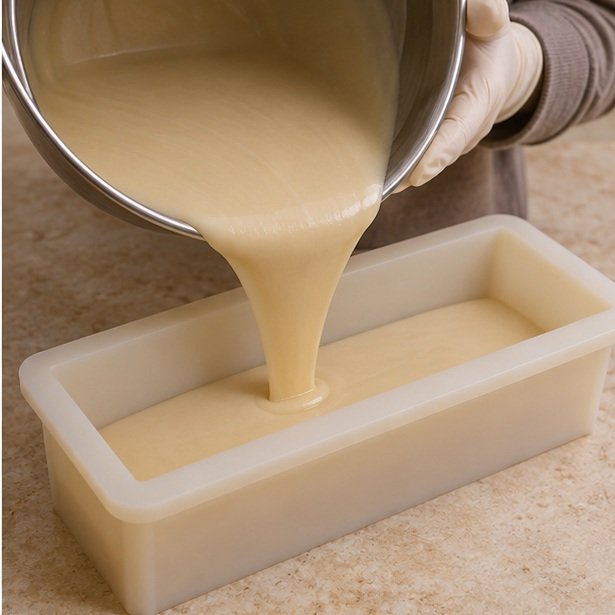
AI-generated illustration: pour the batter into a level silicone loaf mold. 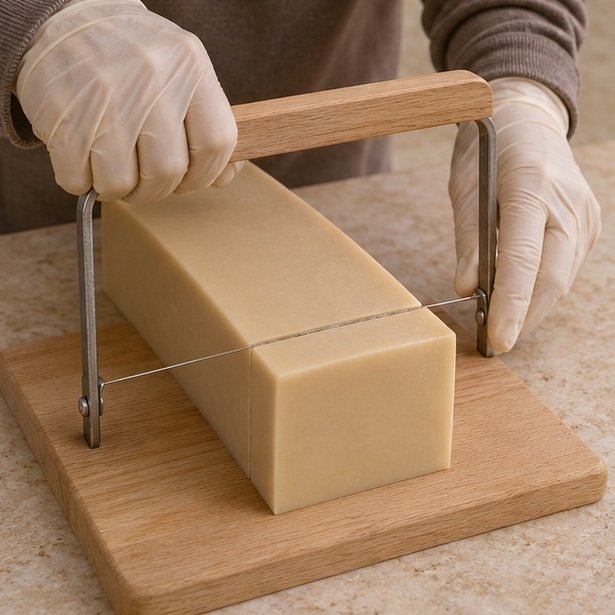
AI-generated illustration: cut the loaf after it releases cleanly and holds its shape. - 06
Cure for 4–6 weeks. Space the bars apart on a rack in a dry, ventilated spot away from direct sunlight. Leave room for air around each bar, especially in humid weather.
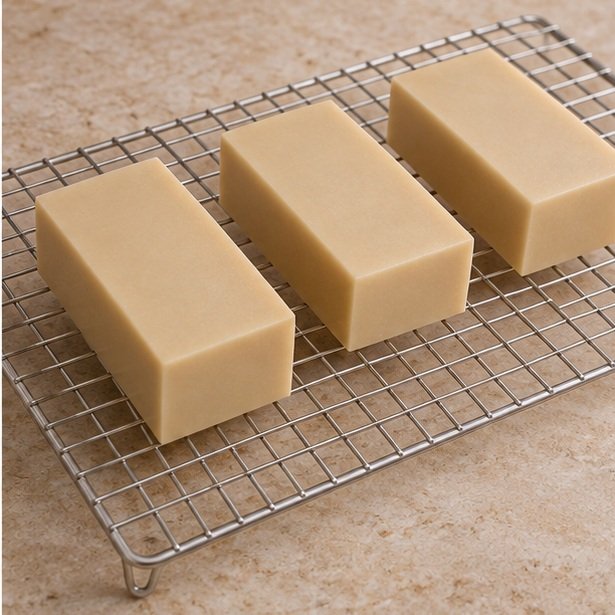
AI-generated illustration: leave air space around each bar during the cure.
05 /
Choose the right oatmeal and scale the batch
Use colloidal oatmeal for the fine texture described in this recipe. Rolled oats are coarser and will change the soap’s appearance.
To scale the batch, keep the oil blend at 40% olive oil, 30% regular palm oil, 25% 76° coconut oil, and 5% castor oil. Enter the new oil weights in SoapSpice to recalculate NaOH and water. Weigh colloidal oatmeal separately at 1% of total oil weight.